Your Guide to AI Voice Text to Speech Technology
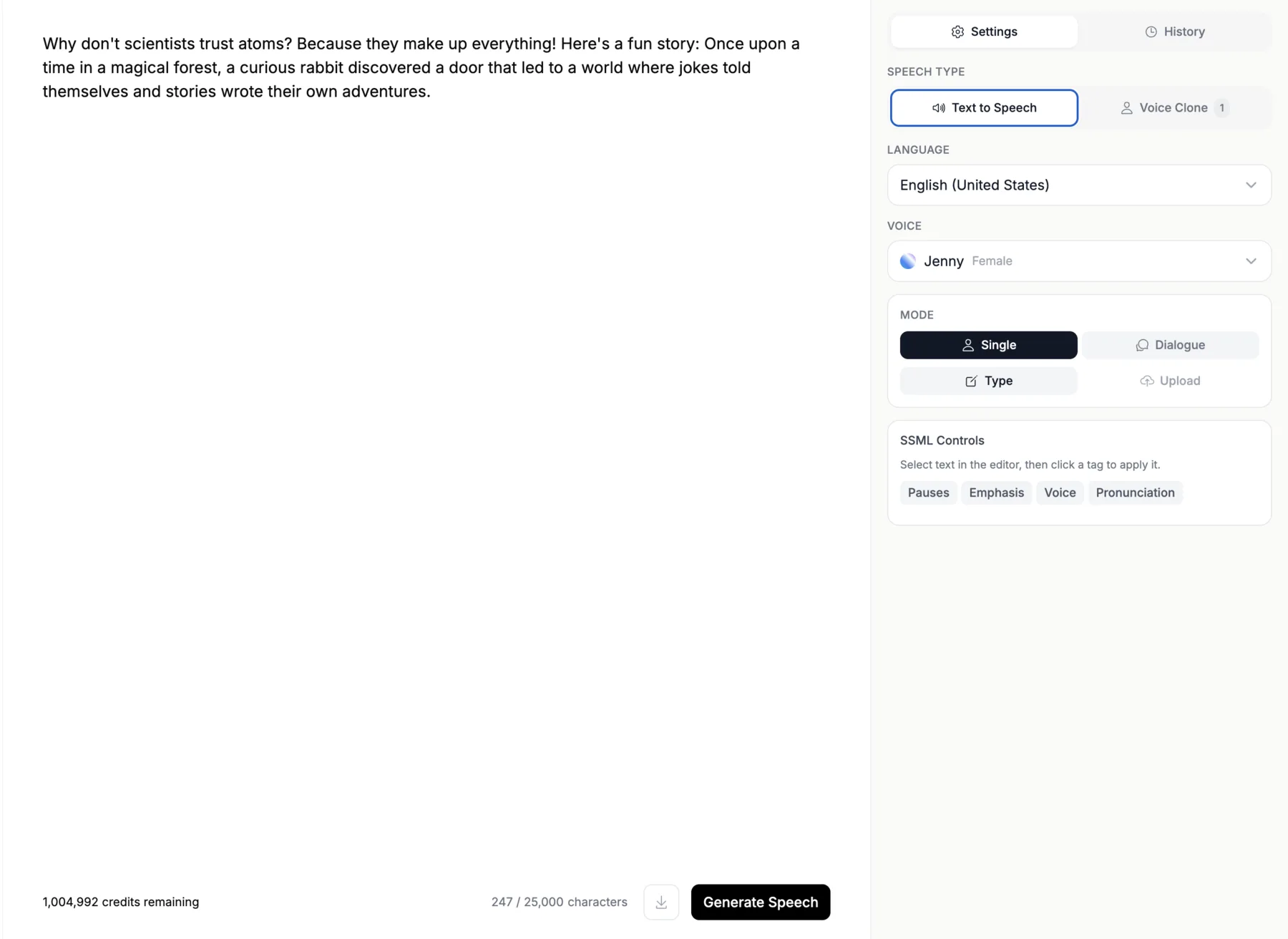
Imagine having a digital storyteller that can read any script you give it, not with a flat, robotic tone, but with all the emotion and natural rhythm of a human voice. That’s the reality of modern AI voice text-to-speech (TTS) technology. It uses sophisticated neural networks to turn your written words into incredibly realistic audio, capturing the tiny details—the pauses, the inflections, the pacing—that make a voice truly come alive.
What Is AI Voice Text-to-Speech Technology?
At its heart, AI voice text-to-speech is a bridge between the words on a page and the sound of a spoken voice. Forget the clunky, disjointed speech of older systems. Those were built by stitching together pre-recorded words, which is why they always sounded so unnatural. Today's AI voices are something else entirely.
These modern systems are trained on enormous datasets of human speech. By analyzing countless hours of audio, they learn the subtle patterns and cadences of natural conversation. The result is a voice generated from scratch that is often indistinguishable from a person speaking, complete with authentic emotion and clarity.
The Engine Behind the Voice
So, how does this actually work? The magic lies in deep learning models and neural networks. When you feed text into the system, the AI doesn't just read the words; it analyzes the context, punctuation, and even the implied sentiment. From there, it predicts what the corresponding audio waveform should sound like and generates it, one tiny sample at a time.
This diagram helps visualize the journey from a simple text input to a rich, realistic audio output, all powered by a central neural network.

As you can see, the neural network acts as the brain of the operation, interpreting the text and synthesizing a completely unique voice performance. This is a fundamental leap from the crude cut-and-paste methods of the past.
Why This Matters for Creators
For anyone creating content, this technology completely changes the game. It removes the traditional hurdles of audio production, like booking expensive studios or hiring voice actors for every project. Now, you can generate professional-grade voiceovers in minutes. This technology is a key part of the larger movement toward using AI for content creation.
A key takeaway for any creator is to see this as a tool for scaling your work. Platforms offering unlimited text-to-speech and voice cloning, like Verbatik, let you produce an endless stream of audio content without hitting character limits or facing unpredictable costs.
This ability to create high-quality audio on demand is fueling explosive market growth. The TTS market is expected to jump from USD 4.36 billion in 2026 to an impressive USD 7.92 billion by 2031. While North America is the current market leader, the Asia-Pacific region is growing at a rapid 14.86% compound annual rate as demand for natural-sounding AI voices skyrockets globally.
This shift means you can spend less time on logistics and more time on what matters: your creative vision. Whether you're making podcasts, narrating videos, or building e-learning courses, the process is now faster and more accessible than ever. For a deeper dive, you can explore our complete guide on how to best use text-to-speech in your projects.
How to Choose the Right AI Voice Generator for Your Projects
Picking the right AI voice generator isn't about finding the one with the longest feature list. It’s more like casting the right actor for a role—the best choice is the one that fits your specific project and audience perfectly. To find that fit, you have to look beyond the slick promises and really dig into what makes a tool genuinely useful.

The first thing you should always do? Just listen. Play the samples. Do they sound human, or can you still hear that faint, robotic buzz from a decade ago? A professional-grade ai voice text to speech platform will deliver audio that’s warm, clear, and engaging right out of the box.
Key Features to Look For
As you start comparing different platforms, a few core features will quickly separate the hobbyist tools from the professional ones. These are the things that truly determine the quality and flexibility of your final audio.
Voice Realism and Variety: Do the voices have genuine human inflection? The best way to tell is to listen for the subtle, natural pauses and shifts in tone that we all use when we speak. You'll also want a deep library of voices, giving you options for different genders, ages, and vocal styles.
Language and Accent Support: If you want to reach people around the world, your audio has to sound local. Look for a platform with a wide selection of languages, but don’t stop there. Check for regional accents. Having just one "English" option isn't enough anymore; you need distinct US, UK, and Australian accents to sound truly authentic.
Emotional Range and Control: This is where the magic happens. Can you direct the AI’s performance? The best tools let you fine-tune the delivery by adjusting pitch, speed, and emotion. Being able to emphasize certain words or add a dramatic pause is what turns a simple script reading into a compelling story.
This level of granular control is the dividing line between a basic text-reader and a powerful audio production suite. For a deeper dive into the selection process, we've put together a full guide on choosing an AI voice generator.
The Real Game-Changer: Voice Cloning
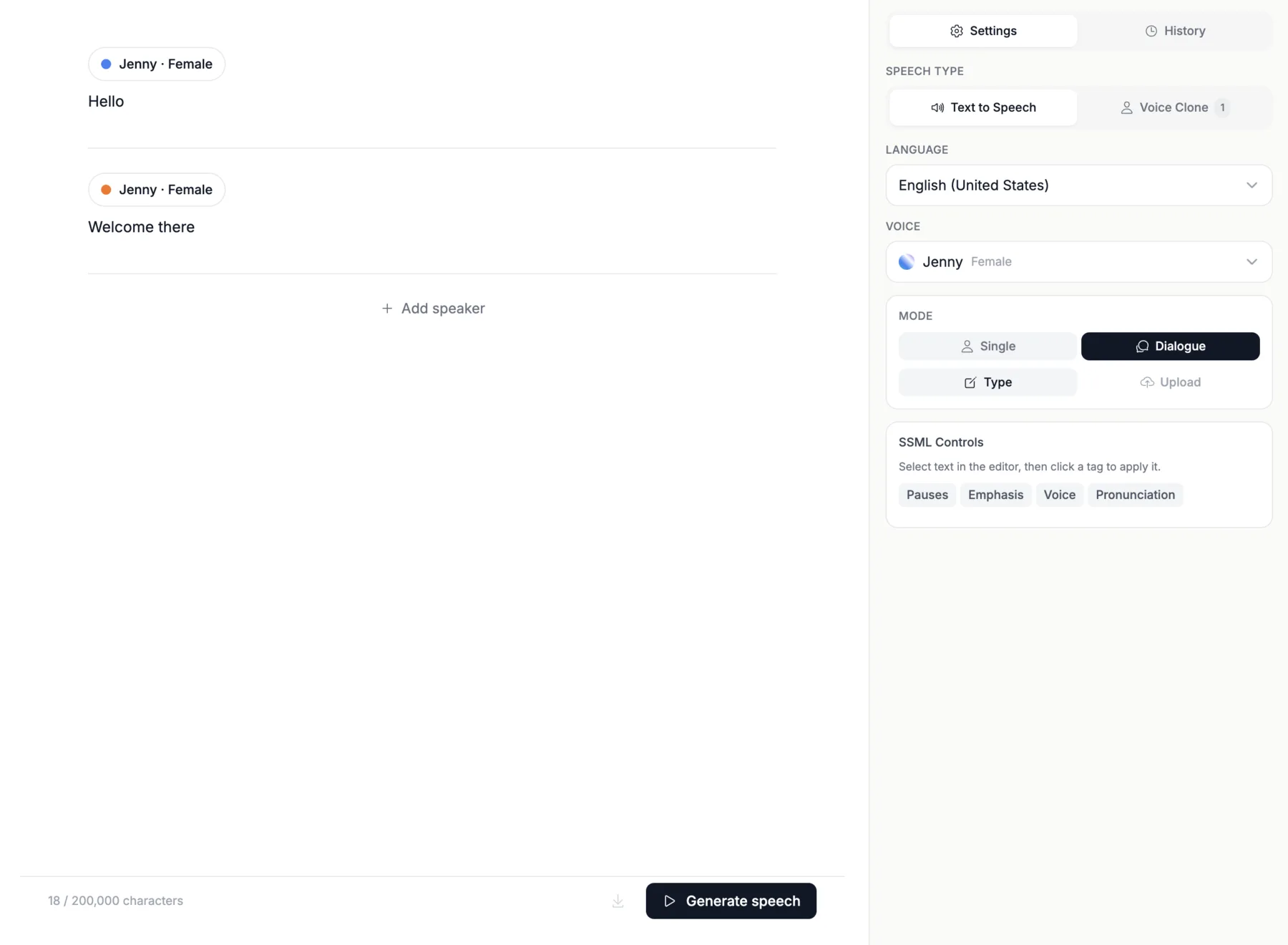
For any creator creating content at scale, voice cloning is probably the single most powerful feature you can have. This technology lets you create a perfect digital replica of a real person's voice—maybe even your own. Think about it: instant brand consistency across every podcast, video, and ad you produce. No more re-recording an entire paragraph just to fix one word; you just type the correction and generate it in your own voice.
When you're looking at platforms that offer this, keep two things at the top of your mind:
Consent and Security: This is non-negotiable. Only work with a platform that has a rock-solid, consent-based process for cloning. You must be the only person who can authorize and use your voice clone, and the provider must guarantee its security.
Quality and Simplicity: How much work does it take to create a good clone? Today's best systems can build a stunningly accurate voice from just a few minutes of clear audio. The process itself should be straightforward and shouldn't require you to have a degree in audio engineering.
An actionable insight is to prioritize the pricing model. Look for platforms like Verbatik that offer unlimited text to speech and voice cloning. This completely changes how you work, freeing you from worrying about character limits or paying extra every time you want to tweak and regenerate a line.
An unlimited model turns your voice into a scalable asset, not a one-off recording. You can produce endless variations of narrations, ads, and e-learning modules with perfect consistency and efficiency. When you aren't counting characters or credits, you have the creative freedom to experiment and polish your audio until it’s perfect.
How to Use AI Voices in Your Content
It’s one thing to understand the tech, but it’s another to see how it can actually make your life easier. AI voice isn't some far-off idea; it's a tool you can use right now to create incredibly professional-sounding audio with surprising speed. We're seeing creators and businesses use it in some really smart ways.
Think of an AI voice generator less as a replacement for a human and more like the most reliable production assistant you've ever had. It’s always on, never gets tired of re-takes, and helps you scale your content in ways that used to be too expensive or just plain impossible.
Supercharge Your Podcast and YouTube Production
If you're a podcaster or YouTuber, you know that audio is non-negotiable. One crackle, a weird echo, or just flat narration can send viewers clicking away. For a solo creator or a small team, this is where AI voices really shine.
You can generate a polished voiceover for a video essay or tutorial in the time it takes to brew a cup of coffee. Just paste your script, and you've got a clean audio track ready to go. This frees you up to spend more time on what really matters—your research, writing, and editing.
Here’s a game-changer: using voice cloning to fix mistakes in post-production. Picture this: you’ve just wrapped up a 20-minute video edit and spot a mispronounced word. The old way involved setting up the mic again and trying to perfectly match the original tone and room sound. With unlimited voice cloning, you can just type the correction, generate it in your own cloned voice, and drop it in. The fix is seamless, saving you a massive headache.
Build Engaging and Accessible E-Learning Modules
Anyone who has developed an e-learning course knows the pain of updates. You change one small detail in a module, and suddenly you have to re-hire a voice actor to record a few new lines. It's expensive, time-consuming, and often results in audio that doesn't quite match the original.
AI voices smooth out this entire process.
- Consistency: Every single module, whether it's an update or a brand-new course, will have the exact same voice and pacing. It creates a much more cohesive and professional experience for the learner.
- Multilingual Training: Need that training course in Spanish, German, and Japanese? Instead of hiring three different voice actors, you can generate localized audio for each language with just a few clicks.
- Accessibility: At its core, text-to-speech is a powerful accessibility tool. It’s essential for making your content available to learners with visual impairments or reading disabilities.
Beyond simple narration, AI is also driving new tools like an AI audio translator, which can help break down language barriers in all kinds of content.
Create Compelling Marketing and Ad Content
Marketing moves fast, and you need to keep up. AI voices give you the agility to quickly test different ad scripts or promotional messages. You can generate three slightly different voiceovers for the same video ad, run them all, and see which one connects best with your audience.
Here’s a practical tip: find a platform that bundles several audio tools together. For example, a service like Verbatik lets you generate narration with unlimited text to speech, browse a library of royalty-free background music, and even mix in sound effects—all in one place. It massively streamlines the workflow for creating social media ads or product demos.
This approach lets you produce high-quality video ads without needing a full recording studio. You can get more ideas from our guide on using text-to-speech for video. Being able to generate, tweak, and deploy audio on the fly makes your entire marketing operation more nimble and budget-friendly.
Mastering Your Audio with SSML
Generating a realistic voice is one thing, but making it sound truly human—with all the pauses, emphasis, and emotion of a real person—is another challenge entirely. This is where you get to step into the director’s chair.
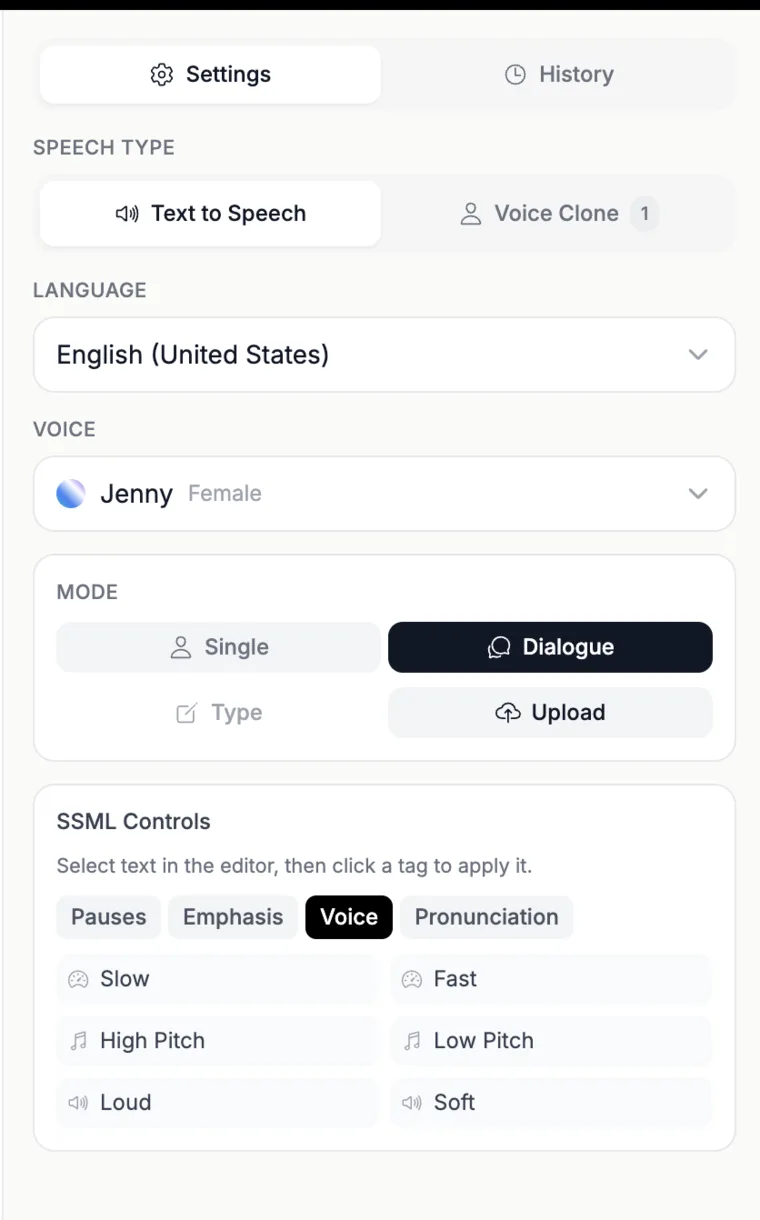
Your tool for this is Speech Synthesis Markup Language (SSML). Don't let the technical-sounding name fool you. SSML is essentially a set of simple, behind-the-scenes instructions that tell an AI voice how to perform your script. It's the difference between a robotic recital and a compelling narration.
This kind of detailed control is becoming non-negotiable. As the global text-to-speech market expands from an estimated USD 5.0 billion in 2025 to a projected USD 17.3 billion by 2035, the demand is for expressive, customizable audio. SSML is what unlocks that next level of quality, making it a must-have skill for anyone creating professional-grade audio. You can read more about the growth of premium neural TTS and its market impact.
The Building Blocks of Voice Control
You don’t need a background in coding to get started with SSML. Most of the time, just a few basic tags can immediately and dramatically improve your ai voice text to speech output. Think of them as your fundamental directing tools.
The most common commands are beautifully simple:
- Pauses: You can insert a pause to create a natural rhythm, give the listener a moment to absorb a key point, or simply mimic how a real person would breathe between sentences.
- Emphasis: Have a word you really want to land? The emphasis tag lets you tell the AI to stress certain words, making your message clearer and more dynamic.
- Speech Rate: You can easily speed the voice up for a high-energy ad read or slow it down for a more thoughtful, deliberate narration. This is one of the fastest ways to match the voice's delivery to the tone of your content.
Basic SSML Commands for Better Voice Control
Getting a feel for SSML is best done by trying it out. Here’s a quick look at some of the most useful tags that anyone can start using right away to make their AI audio sound more polished and natural.
| SSML Tag | Function | Example Usage |
|---|---|---|
<break> |
Adds a pause. | Wait for it... <break time="2s"/> there. |
<emphasis> |
Stresses a word or phrase. | This is <emphasis level="strong">very</emphasis> important. |
<prosody> |
Controls rate, pitch, and volume. | He spoke <prosody rate="slow">very slowly</prosody>. |
<say-as> |
Specifies how to say a number, date, or acronym. | The final score was <say-as interpret-as="cardinal">42</say-as>. |
<p> |
Denotes a paragraph, adding a natural pause before and after. | <p>This is the first paragraph.</p><p>This is the second.</p> |
These commands are the foundation of great AI narration. An actionable tip: use a platform with unlimited text to speech so you can experiment freely with these SSML tags and re-generate your audio as many times as you need to perfect the delivery, without worrying about cost.
Practical Tips for Flawless Narration
Once you're comfortable with the basics, you can use SSML to solve some of the most common text-to-speech headaches. For instance, getting an AI to pronounce brand names, industry jargon, or unique acronyms correctly can be a real struggle.
The fix is often to use a tag that allows for phonetic spelling. Let's say your company is named "Readit" (pronounced "read it"), but the AI keeps saying "red-it." You can use SSML to spell the word out phonetically, ensuring it's pronounced perfectly every single time.
Another simple but effective tip is to work on the structure of your script itself. Breaking long, dense paragraphs into shorter ones naturally improves the pacing and flow of the narration. When you combine this with a few well-placed <break/> tags, you guide the AI to deliver a performance that feels measured, thoughtful, and easy for your audience to follow.
You can try these techniques right now with a free SSML generator to hear the difference for yourself.
The Future Is Voice Cloning and Generative Audio
While mastering SSML gives you incredible control over an AI voice, the next step is even more exciting. We're moving beyond just tweaking pre-made voices and into an age of truly creative audio generation. Voice cloning and AI-powered soundscapes aren't just concepts on the horizon; they are real tools you can use today, opening up a whole new world for ai voice text to speech technology.

Voice cloning used to feel like something out of a sci-fi movie, but it's now surprisingly straightforward. The process allows you to create a digital replica—a "voice twin"—of your own voice using just a small, high-quality audio sample. This cloned voice can then read any text you give it, perfectly capturing your unique intonation and style.
The Power of Your Digital Voice
The real magic of voice cloning is its ability to deliver consistency and scale. Think about it: if you're a content creator who needs to produce personalized audio for thousands of listeners, or a company aiming for a consistent vocal brand across all your ads, cloning your voice makes it manageable.
- Effortless Corrections: Made a mistake in a recording? No need to re-record the whole thing. Just type the corrected sentence and have your cloned voice generate the fix seamlessly.
- Brand Consistency: From podcast intros to social media ads, you can ensure every piece of audio content features your signature sound, building a stronger, more recognizable brand.
- Personalized Content at Scale: Imagine creating custom welcome messages, tailored product tutorials, or targeted ad reads, all delivered in a familiar and trustworthy voice.
To get a better sense of how it works, our guide on free AI voice cloning walks you through the process. The best part is that services with unlimited voice cloning allow you to turn your voice into a endlessly reusable asset.
Beyond Voice to Generative Soundscapes
But the evolution doesn't stop with voice. The best platforms are now integrating generative audio, letting you create AI-generated music and sound effects right alongside your voiceovers. This creates a complete audio production suite where you can craft every element of your sound design in one place.
The most practical advice for creators is to find a platform that brings these tools together. Think about a workflow where you can generate a voiceover with your own unlimited cloned voice, compose a custom background track to match the mood, and drop in specific sound effects—all without juggling multiple apps. This is the new benchmark for efficient audio creation.
This all-in-one approach is becoming more important as the market expands. The AI voice generator market is projected to hit somewhere between USD 3.0-6.0 billion by 2026. While North America currently has a 35.10% share in conversational AI, regions like Asia are catching up fast, with significant growth projections for conversational AI in Japan, China, and India.
Choosing a platform with a full suite of integrated features—especially one like Verbatik that offers unlimited text to speech—positions you to take full advantage of this trend. It removes the friction of usage limits, allowing you to experiment and refine your audio until it's just right. That freedom is what truly enables creative excellence.
Navigating the Ethics of AI Voice Technology
As ai voice text to speech gets astonishingly good, the conversation has shifted. It’s no longer just about what we can create, but how we create it. Using this technology responsibly is crucial for building trust with your audience and, just as importantly, for staying on the right side of the law.
The power to perfectly replicate a human voice brings a host of ethical questions to the table, and every creator needs to have good answers.

When it comes to cloning someone’s voice, the entire discussion starts and ends with consent. You absolutely must have explicit, verifiable permission from the individual. There are no shortcuts here; this is the bedrock of ethical AI voice generation.
The Cornerstones of Responsible AI Voice Use
To keep your projects on solid ethical and legal ground, you really just need to focus on three core principles. Nail these, and you can innovate with confidence.
Consent-Based Voice Cloning: This is non-negotiable. Never, ever clone a voice without clear, documented authorization. Reputable platforms won't even let you, as they require strict verification to prevent misuse. This protects the individual, but it also shields your brand from massive legal and reputational blowback.
Transparency with Your Audience: If your project uses an AI-generated or cloned voice, just say so. Whether it's in a podcast, a marketing campaign, or an audiobook, a simple disclaimer goes a long way. It prevents listeners from feeling tricked and shows that you respect them. Honesty is always the best policy.
Clear Commercial Rights: Before you publish anything, you need to be certain you have the legal right to use the generated audio for commercial purposes. Vague licensing agreements are a ticking time bomb that can lead to takedown notices or expensive lawsuits.
The most practical first step is choosing a platform that bakes ethics directly into its features. A service like Verbatik, for example, might offer unlimited voice cloning, but it’s built on a system that requires strict proof of consent. This gives you both creative freedom and the necessary guardrails.
Why Your Platform Choice Is Your First Line of Defense
Think of the platform you use as your partner in ethical creation. A good partner doesn't just hand you powerful tools; they provide a framework to use them safely.
For instance, when a tool gives you unlimited text to speech, it should also grant you crystal-clear commercial rights for everything you create. This is what allows you to monetize your YouTube videos, advertisements, and e-learning courses without constantly looking over your shoulder.
Ultimately, committing to ethical practices is what protects the long-term value of your work. By choosing platforms that enforce consent, champion transparency, and offer unambiguous commercial licenses, you can integrate ai voice text to speech into your workflow without compromising your integrity.
Frequently Asked Questions About AI Voice
When you first dive into the world of ai voice text to speech, a few questions tend to pop up right away. Let’s get you some answers from someone who's been in the trenches with this tech.
Can AI Voices Really Sound Human?
They absolutely can, and the best ones are virtually indistinguishable from a person speaking into a microphone. Modern AI voices are trained on mountains of human speech, which teaches them all the little quirks—the pauses, the shifts in tone, the subtle emotion—that make us sound human.
The real magic for creators, though, is in the controls. With a few simple tweaks using SSML (Speech Synthesis Markup Language), you can direct the AI’s delivery, guiding its pacing and emphasis to get a performance that feels genuinely alive.
Is It Hard to Clone My Own Voice?
Not anymore. The days of needing an audio engineer and expensive software are long gone. Today's platforms have made voice cloning something anyone can do in just a few minutes.
The most practical takeaway here is that you can get a high-quality digital copy of your own voice with very little effort. Platforms like Verbatik offer unlimited voice cloning from just a short audio recording. This lets you experiment and re-record your clone as many times as you need to get it just right for your content, without any technical headaches.
This simple process turns your voice into an endlessly reusable tool, ready to be used across all your projects.
How Much Does AI Voice Text to Speech Cost?
Pricing for AI voices usually comes in one of two flavors: you either pay by the character or pay a flat subscription. Paying per character can get surprisingly expensive and makes budgeting a nightmare, especially if you’re creating long-form content like podcasts or audiobooks.
A subscription plan, particularly one that offers unlimited text to speech, almost always provides better value. It takes the financial guesswork out of the equation, so you can create freely without watching a meter run. For anyone who wants to experiment, iterate, and produce a lot of audio, an unlimited plan is the most sensible and creatively freeing choice.
Ready to create stunning audio for your projects? With Verbatik, you get unlimited text-to-speech, instant voice cloning, AI-generated music, sound effects, and a full suite of tools to bring your content to life. Start creating studio-quality audio in minutes at https://verbatik.com.