Your Actionable Guide to AI Voice Generator Text to Speech in 2026
An AI voice generator text-to-speech platform is a tool that turns written text into incredibly realistic audio. Think of it as having a professional voice actor on call, ready to produce studio-quality voiceovers without you ever needing a microphone or fancy recording gear. We've come a long way from the clunky, robotic voices of early GPS systems; today's AI can deliver speech packed with genuine emotion and nuance, making it perfect for grabbing and holding an audience's attention.
Why AI Voices Are Changing the Game for Creators
The entire process of creating and consuming content is undergoing a massive shift, and AI-generated voices are right at the center of it. What used to be a major production—finding and hiring voice actors, booking expensive studio time, and dealing with endless retakes—is now something anyone can do with just a few clicks. This has completely opened up the world of high-quality audio to creators and businesses of every size.
For YouTubers, course creators, and marketing teams, this is a huge deal. It means creating top-tier audio content for a tiny fraction of the traditional cost. But it's not just about saving money. It's about opening up brand-new avenues for creativity and scaling up production in ways that were simply impossible before.
The Power of Unlimited Production
One of the biggest hurdles in the past was the pricing. Many older platforms charged by the character, which punished creators for experimenting or working on longer projects. Fortunately, that's changing. Modern platforms like Verbatik are leading the charge with a new model: unlimited text to speech and voice cloning. This is a critical point—creators are finally free from worrying about every single letter they generate.
Imagine being able to produce an entire audiobook, test out dozens of different ad scripts, or translate your videos into several languages without constantly checking your character count. This freedom means you can put all your energy into being creative instead of watching your budget. With Verbatik's unlimited text to speech and voice cloning, you can execute ambitious projects without financial penalties.
This move is a key part of the broader trend toward AI powered content creation that's fundamentally changing how digital media gets made. An AI voice is a powerful tool in this new landscape, helping you build a consistent and instantly recognizable audio brand. You can learn more about how to select the right AI voice for your needs in our detailed guide.
A Market on the Rise
It's no surprise that demand for this technology is skyrocketing. The global market for AI voice generators is expected to jump from an estimated USD 5.61 billion in 2026 to an incredible USD 33.08 billion by 2032. This explosive growth is fueled by the increasing need for personalized audio experiences in entertainment, e-learning, and gaming.
For creators, this trend signals a golden opportunity to simplify workflows and generate professional-grade audio in mere seconds. The benefits really boil down to three main advantages:
- Scalability: Churn out massive amounts of high-quality audio content with speed and efficiency.
- Consistency: Keep your brand's voice and tone uniform across every project and platform, especially with voice cloning.
- Accessibility: Make professional audio production a reality, no matter the size of your budget.
Understanding How AI Learns to Speak
Remember the jump from those old, robotic GPS voices to the hyper-realistic virtual assistants we have today? It feels like magic, but it’s really just a massive leap in technology. The old way was clunky, like a machine reading words from a dictionary. The new way is like listening to a skilled audiobook narrator who understands emotion, pacing, and when to pause for effect.
Modern AI voice generators act much more like that narrator. Instead of simply matching letters to pre-recorded sounds, they use sophisticated neural networks to analyze the context of a sentence. This allows the AI to mimic human intonation, stress, and rhythm, resulting in speech that feels fluid and natural. It isn't just "reading" the text; it's interpreting the flow to generate a completely new audio waveform that sounds incredibly human.
This process has a direct and powerful impact on content creation, improving everything from audio quality to global reach.

The Science of Voice Cloning
Voice cloning takes this all a step further by creating a true digital twin of a specific person's voice. Think of the AI as a meticulous vocal analyst studying someone's unique "voice fingerprint." It breaks down short audio samples to identify the core characteristics that make a voice one-of-a-kind.
The AI essentially maps out:
- Timbre: The unique quality and texture of the voice. Is it raspy, smooth, or breathy?
- Pitch: The typical highs and lows used during natural speech.
- Pacing: The inherent speed and rhythm of how someone talks.
- Accent & Dialect: The specific pronunciations and regional quirks that define a speaking style.
Once the AI learns these patterns, it can generate entirely new speech that perfectly preserves that person's distinct vocal identity. This is a game-changer for anyone looking to build a consistent and personal audio brand. You can explore a deeper dive into the mechanics in our guide on the fundamentals of AI voice generation.
From Theory to Actionable Results
The good news is that this technology is no longer stuck in research labs. Platforms like Verbatik make these advanced features accessible to everyone. The real advantage isn't just the quality of the clone, but how you can use it. For instance, Verbatik offers unlimited voice cloning, which is a massive strategic benefit for creators.
Instead of getting nickeled and dimed for every use or wrestling with complex setups, you can create a perfect digital replica of your own voice and use it across all your projects without limitation. This allows you to maintain a consistent, personal connection with your audience on every podcast episode, YouTube video, or advertisement you produce.
This practical approach turns voice cloning from a cool concept into a powerful tool for scaling your content. It ensures that every piece of audio you create carries your unique brand identity, no matter how much you need to produce. With Verbatik, the ability to generate endless audio with your own voice finally puts professional-grade, personalized audio production into the hands of every creator.
How to Choose the Right AI Voice Generator
Picking the right AI voice generator can feel like a tough decision, but it really comes down to a few key factors that will make or break your project. Whether you're launching a podcast, building an e-learning course, or creating a video ad, the best tool is the one that fits your specific needs. A little homework now saves a lot of headaches later.
The first thing to listen for is, quite simply, the quality of the voices. We’ve all heard those old, robotic text-to-speech systems. Thankfully, modern AI can produce audio that's incredibly lifelike. When you’re testing a platform, don't just check for clear pronunciation. Listen for the small things—the natural pauses, the subtle shifts in emotion, and the rhythm of the speech. That’s what separates a decent voice from a truly believable one.
Evaluating Voice Libraries and Customization
A big library of voices gives you creative freedom. You'll want a platform with hundreds of options spanning different languages, accents, and even dialects. This is especially crucial if you're trying to reach a global audience or find a unique voice that perfectly matches your brand.
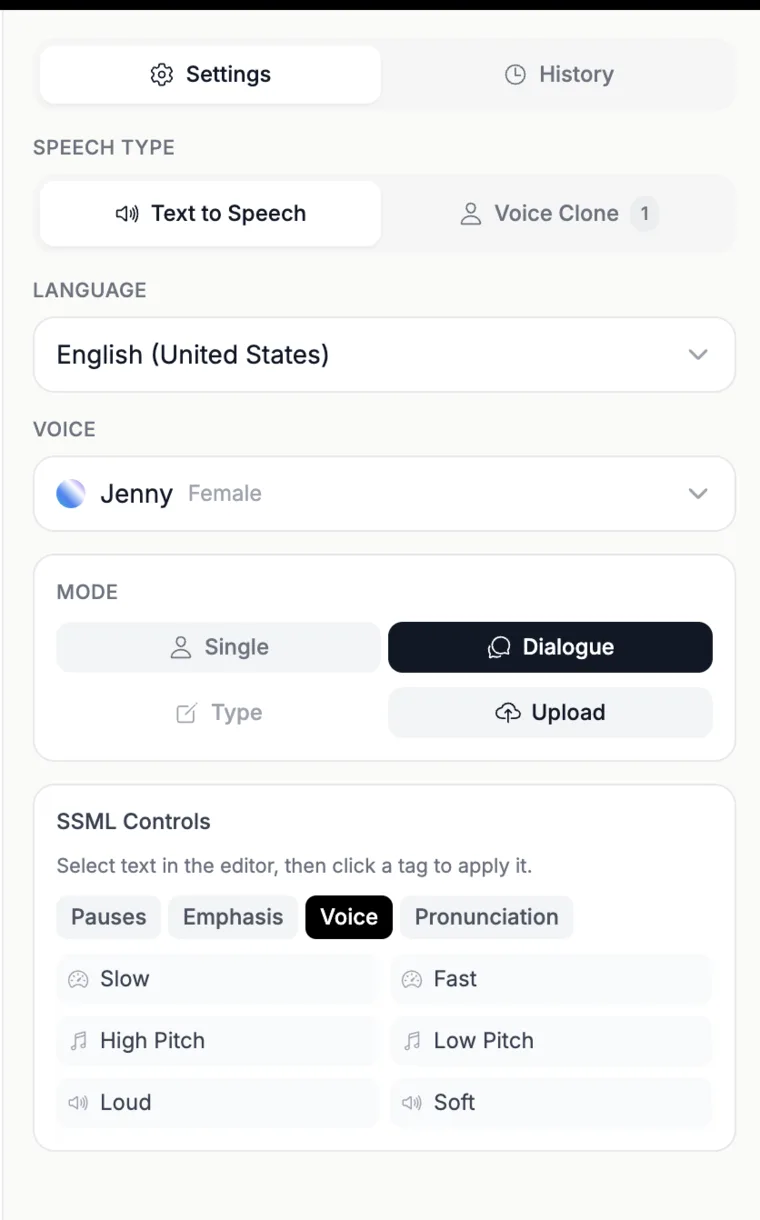
But a huge catalog isn't everything. The magic is in the details. The best tools let you get in there and direct the performance, just like you would with a human actor. Look for controls that let you adjust:
- Pitch: Making the voice higher or lower for emphasis.
- Speed: Speeding up or slowing down the narration to set the right mood.
- Pauses: Adding strategic silence for dramatic effect or better pacing.
- Emotion: Dialing in different styles like "upbeat," "somber," or "professional."
These fine-tuning capabilities are what empower you to create truly compelling audio. As you explore your options, it's also smart to check out the wider world of top AI content generation tools, as many are now incorporating these kinds of advanced voice features.
Understanding Pricing Models and Usage Rights
This is where things can get tricky. Many AI voice generators charge you by the character. That might sound fine at first, but it can get expensive fast, especially for long-form content like audiobooks or podcasts. This model can stifle creativity, making you second-guess every script revision.
That’s why a platform like Verbatik stands out by offering unlimited text to speech and voice cloning. A flat-rate subscription means you can experiment, iterate, and produce as much audio as you need without watching the meter run. For creators with big ambitions, that freedom is a game-changer.
Just as important are the legal rights. Before you commit, double-check that the platform gives you full commercial and broadcast rights. Without them, you can’t legally use the audio in monetized YouTube videos, paid ads, or any product you intend to sell. And when it comes to voice cloning, only work with a provider that requires explicit consent. You should only ever clone your own voice or one for which you have clear, documented permission.
When deciding on a tool, comparing features side-by-side can make the choice much clearer. Here’s a quick breakdown of what to look for and how Verbatik approaches these key areas.
AI Voice Generator Feature Comparison
| Feature | Typical AI Voice Generators | Verbatik's Advantage |
|---|---|---|
| Pricing Model | Per-character or tiered usage limits, which can get costly and restrictive. | Unlimited generation and voice cloning with a flat-rate subscription. No surprise bills. |
| Voice Cloning | Often limited or requires high-tier plans. Consent and security can be unclear. | Integrated and unlimited, with a strict user-consent security model. |
| Audio Workflow | Requires exporting audio to mix with music/SFX in a separate program. | A built-in Sound Studio lets you mix voice, music, and effects in one place. |
| Commercial Rights | May require expensive enterprise plans or have confusing licensing terms. | Full commercial and broadcast rights are included, even for cloned voices. |
| Voice Library | A large but sometimes generic collection of standard voices. | Access to a vast library plus the ability to create unique, custom voice clones. |
This comparison highlights how a more integrated and unrestricted platform can directly support a more ambitious and efficient creative process.
The Importance of a Unified Workflow
Finally, think about your entire production process. A great AI voice generator text to speech tool should simplify your workflow, not complicate it. For example, Verbatik combines its voice generator with a Sound Studio, so you can mix your generated speech with royalty-free music and sound effects right in the same dashboard.
This all-in-one approach means no more jumping between different apps to get the job done. You can go from script to final audio mix in a single, streamlined environment. To see how this works in practice, check out our guide on creating text to speech realistic voices. By focusing on these practical criteria, you can confidently find a tool that doesn’t just work for you today but also helps you grow tomorrow.
Powerful Use Cases to Transform Your Content
An AI voice generator text to speech platform is more than just a neat trick; it’s a powerful tool for solving real-world content headaches. When you stop thinking about the theory and start looking at the practical applications, you'll see how this technology can become the hub of your entire audio workflow. It’s what turns ambitious ideas into polished, market-ready content, and it does it fast.
The real magic happens when you connect specific features to your business goals. For creators and companies, that means pinpointing your biggest production bottlenecks and using AI to bust through them. Whether you're trying to scale up your output, reach new audiences, or just make your content more compelling, AI voices can help.

For Podcasters and YouTube Creators
In the world of online content, consistency is king. Your audience sticks around for your voice and your unique take. This is exactly where unlimited voice cloning from a platform like Verbatik becomes a game-changer. You can create a perfect digital copy of your own voice, ensuring every ad read, intro, or sponsored spot sounds authentically you—even if you're not the one hitting record.
But the possibilities go far beyond just branding. Imagine taking your hit podcast or video series global without hiring an entire team of voice actors. With a huge library of languages at your fingertips, you can generate voiceovers for new markets in an instant. This is incredibly timely, as the appetite for AI voices is exploding worldwide.
The global AI voice generator market is expected to jump from USD 4.20 billion in 2025 to a massive USD 33.08 billion by 2032, with the Asia-Pacific region leading that growth. This surge is fueled by creators outside the English-speaking world, especially in Southeast Asia and India. They need tools like Verbatik, which offers over 142 languages and unlimited text to speech, to reach this rapidly expanding audience without budget constraints. You can dive deeper into the market trends in this detailed research.
For E-Commerce and Social Media Marketers
In the blink-and-you-miss-it world of social media, authenticity is what sells. User-generated content (UGC) style ads are fantastic for building trust, but producing them is often slow and costly. An AI voice generator text to speech platform completely flips that script, letting you create convincing, UGC-style video ads at scale.
Think about it: using a tool like Verbatik's AI Avatar generator, you can pair a realistic digital human with a natural-sounding voice to churn out countless testimonial videos. This lets you A/B test different scripts, highlight various products, and try out new calls-to-action on platforms like TikTok and Instagram Reels without the hassle of coordinating with actors or influencers. You could create a dozen ad variations in the time it used to take to shoot just one.
For E-Learning and Course Creators
The big challenge for any course creator is making content that’s both engaging and accessible to everyone. A droning, monotonous narration is a surefire way to have students tune out. By using AI voices with customizable emotion and pacing, you can craft educational modules that actually hold attention and feel dynamic.
Even better, AI makes it practical to serve a truly diverse student body. Here’s how it can completely change your e-learning business:
- Multilingual Modules: Instantly translate your course materials into dozens of languages, throwing the doors open to students all over the globe.
- Painless Updates: Need to fix a mistake or update a lesson? Just edit the text and regenerate the audio in seconds. No more re-booking and paying a voice actor for a tiny change.
- Interactive Scenarios: Generate distinct character voices for role-playing exercises or branching learning paths, creating a much more immersive and effective educational experience.
With a platform offering unlimited text to speech, you're free to build a massive, multilingual course library without getting penalized for volume. And when you combine that with tools like Verbatik's Sound Studio, you can layer in royalty-free background music and sound effects to produce a genuinely professional final product. That's how you make your courses stand out in a very crowded market.
Create Your First AI Voiceover with Verbatik
Reading about an AI voice generator text to speech platform is one thing, but actually creating your first professional-grade audio file is where the magic really happens. Let’s walk through the process using Verbatik to show just how simple it is to go from a block of text to a polished voiceover in only a few minutes. I'll guide you through both generating speech from a script and cloning your own voice.
What's great is that the whole process is designed to be incredibly intuitive—no technical skills are needed. Verbatik’s entire workflow happens in a single, clean dashboard, so you can manage your projects without juggling different apps. This is what helps move audio production from a specialized skill to an everyday task for any content creator.
Generating Your First AI Voiceover
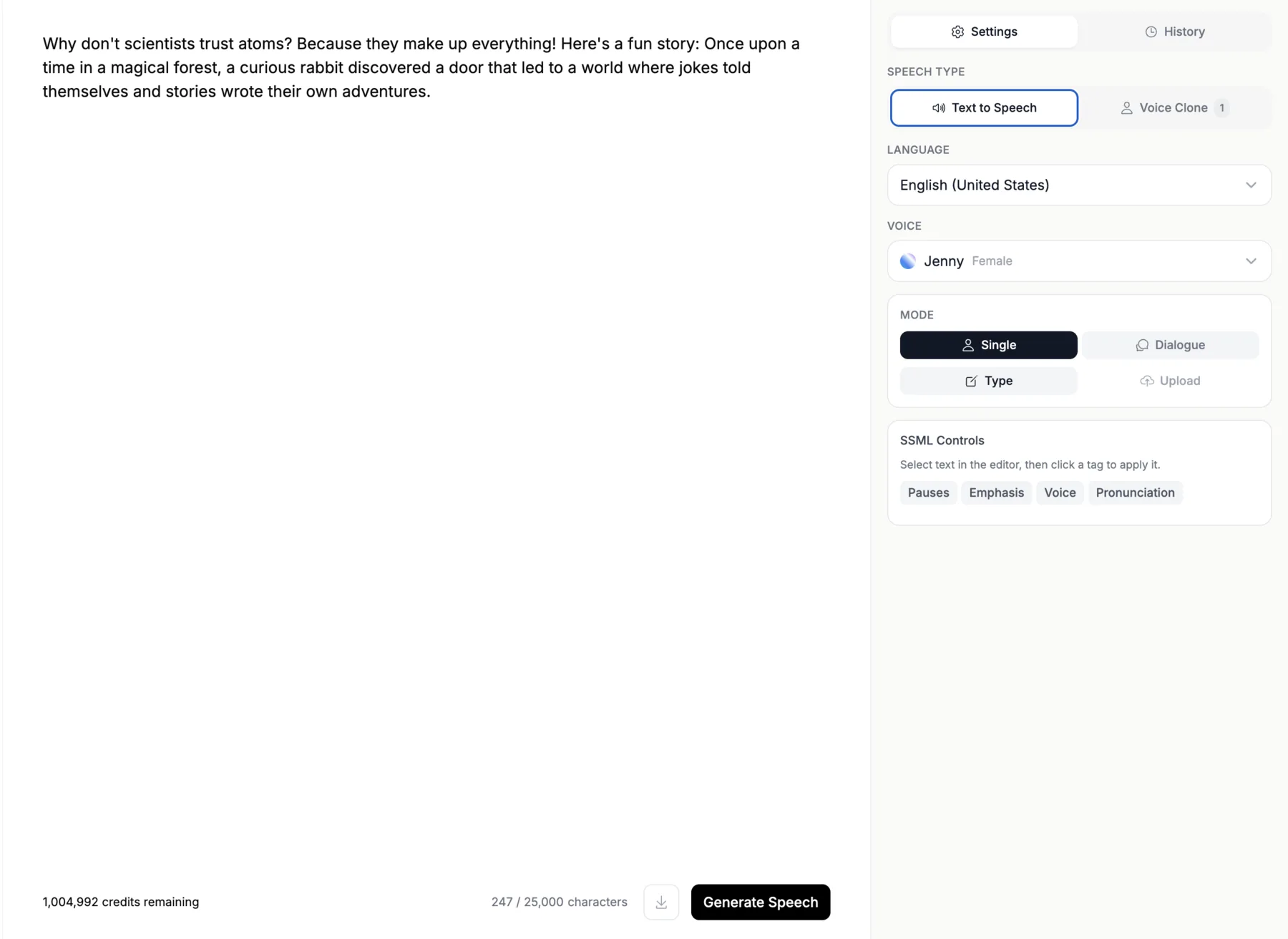
Once you log into the Verbatik dashboard, you can get started right away. The main text-to-speech interface is completely straightforward: you’ll see a large text box for your script, with all the voice selection and customization options right beside it.
It really is as simple as these three steps:
- Paste Your Script: Just copy the text you want to convert and paste it directly into the editor.
- Choose Your Voice: Browse the library of over 600 voices across more than 140 languages. You can filter by gender, age, and style to find the perfect fit for your project.
- Generate and Download: Click the "Generate" button. In seconds, your audio file is ready to preview and download as either an MP3 or a high-quality WAV file.
This screenshot shows you exactly what the Verbatik text-to-speech dashboard looks like in action.

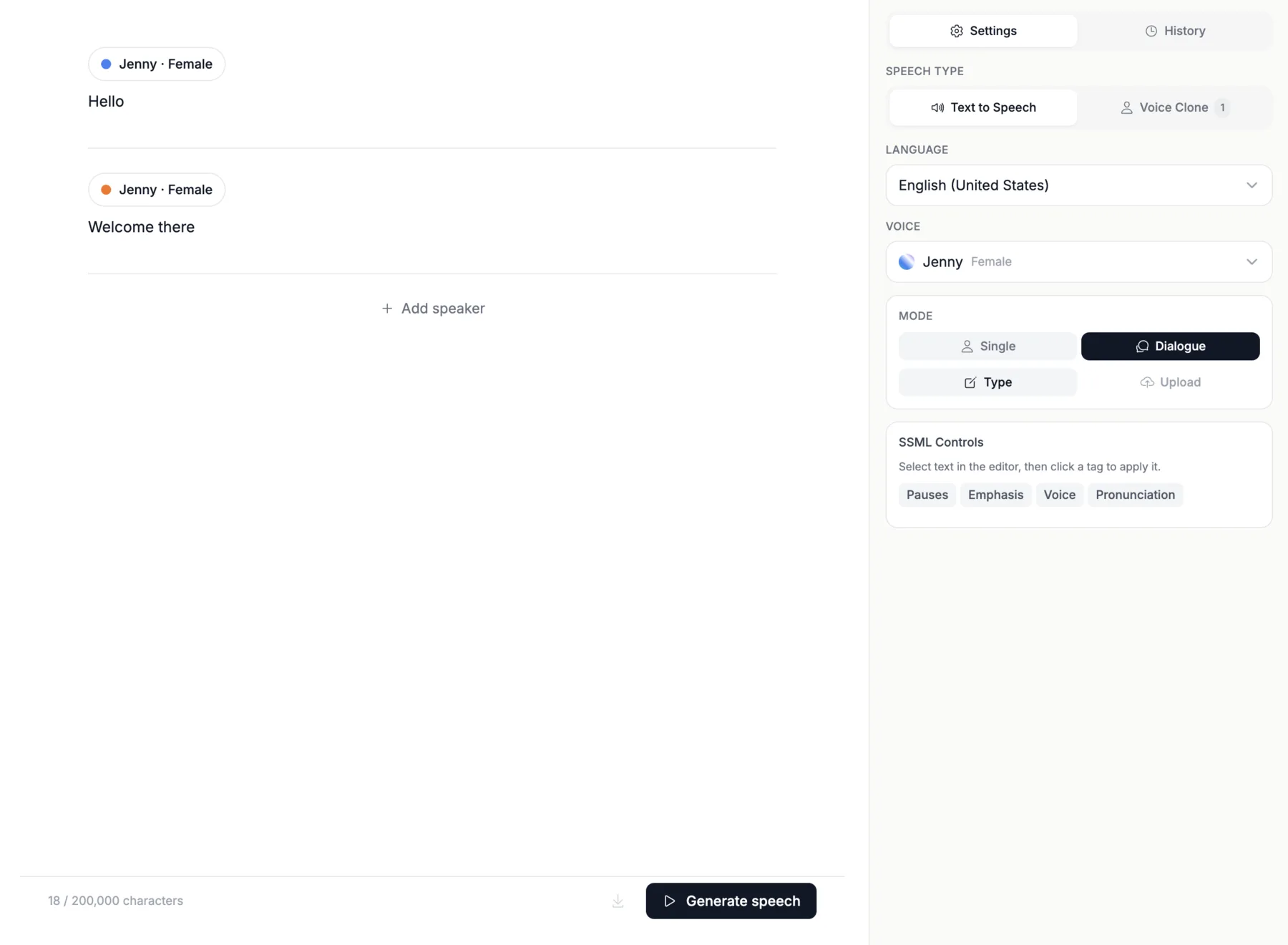
As you can see, all the tools you need—the text editor, voice library, and generation controls—are all in one clean workspace. This really simplifies the entire audio creation process.
Creating a Digital Twin with Instant Voice Cloning
While the pre-made voice library is powerful, the ability to create a consistent, personal audio brand is where voice cloning truly shines. This feature lets you create a digital replica of your own voice, which you can then use for any project. It’s perfect for podcasters, course creators, and marketers who want every piece of audio to sound authentically "them."
Best of all, platforms like Verbatik operate on a strict consent-based model. This means you can only clone your own voice or one for which you have explicit permission, ensuring the technology is used ethically and responsibly. You can explore Verbatik’s full suite of AI text to speech capabilities on our site to learn more.
Cloning your voice is just as easy:
- Navigate to Voice Cloning: Simply find the "Voice Cloning" section in your dashboard.
- Upload Your Sample: Provide a clean audio sample of the voice you want to clone. This should be a high-quality recording with no background noise, usually between one to five minutes long.
- Generate Your Voice Model: The AI gets to work, analyzing your voice's unique characteristics—its pitch, timbre, and pacing. In a short time, your custom voice model is ready to use.
Once your voice is cloned, it becomes part of your personal library. You can select it just like any other pre-made voice and use it for any script you want. With Verbatik's promise of unlimited voice cloning, you can create and use your digital twin as much as you need without ever hitting a limit.
Putting It All Together
This hands-on approach proves that creating professional audio is no longer a complicated, time-consuming task. With an intuitive AI voice generator text to speech platform, you can produce high-quality voiceovers and even clone your own voice in a matter of minutes.
The real benefit here is the creative freedom it unlocks. Because Verbatik offers unlimited text to speech and cloning, you're free from the old constraints of character-based pricing. You can experiment with different scripts, produce long-form content like audiobooks, and scale your audio production without ever worrying about surprise costs. This model empowers you to focus on what matters most: creating great content.
How to Scale Audio Production with an API
While a web dashboard is great for one-off projects, what happens when you need to generate audio for thousands of articles or personalized messages? That's when you hit a wall with manual work. The solution is an Application Programming Interface (API).
Think of an API as a direct line of communication between two pieces of software. It lets your application, website, or backend system "talk" to the AI voice generator automatically, without anyone needing to click a button. By integrating a text-to-speech AI voice generator API, you're essentially building voice generation capabilities right into your own products. Your system can send text and get back a finished audio file, all on its own.
What Automation with an API Looks Like
Moving from manual generation to an API-driven workflow opens up a world of possibilities. You can build systems that operate at a scale that would be completely impossible for a human team.
For instance, you could:
- Instantly convert blog posts to podcasts: Set up a script that creates a high-quality audio version the moment you hit "publish" on a new article.
- Generate personalized audio at scale: Imagine a marketing campaign where thousands of customers receive an audio message that greets them by name or confirms their specific order details. An API makes that happen.
- Power in-app voice features: Build dynamic, real-time voice narration directly into your mobile app, e-learning platform, or video game.
This kind of automation is no longer a luxury; it's a key part of growth. In fact, the demand for developer tools in this space is exploding. The market segment for APIs and developer tools is expected to grow at a staggering 34.7% CAGR, as noted in research from PR Newswire. Businesses are scrambling to embed high-fidelity voices into their applications, and APIs are how they do it.
Scaling Affordably with Verbatik
Historically, one of the biggest roadblocks to using an API for audio has been the fear of unpredictable costs. Many pricing models can quickly become expensive as your usage grows. Platforms like Verbatik change that. It's designed to support you from your very first project all the way to a massive, enterprise-level operation.
With Verbatik, you get API access to the same top-tier voices and powerful features—including unlimited text to speech and voice cloning—all wrapped in a clear and well-documented API. You can build powerful, scalable audio applications without worrying about a surprise bill at the end of the month. It's about turning your content strategy into a well-oiled, automated machine.
This approach gives developers and businesses the freedom to build sophisticated audio experiences without the usual budget constraints. For a deeper dive into the technical side, our guide on using a text to speech API has all the details your team needs to get started. Ultimately, an API is the bridge that takes you from small-scale creation to large-scale audio impact.
Frequently Asked Questions About AI Voices
Jumping into the world of AI voice generators can bring up a lot of questions. Getting straight answers is the best way to feel confident about using this technology. Let's walk through some of the most common things people wonder about.
Are AI-Generated Voices Really Good Enough for Professional Use?
Absolutely. The robotic, monotone voices of the past are long gone. Today's top-tier neural text-to-speech platforms, like Verbatik, create audio that's almost impossible to tell apart from a human speaker.
These voices capture the subtle nuances—the natural pacing, the shifts in tone, and the emotional delivery—that make professional audio so engaging. That’s why you’re now hearing them in high-stakes projects like podcasts, audiobooks, and commercials. The quality has reached a point where you can get studio-grade results every time.
What Are the Rules for Using Cloned Voices Legally?
This is a big one, and it all comes down to ethics and permission. The most reputable platforms operate on a strict, consent-first basis.
What does that mean? It means you can only clone your own voice or a voice you have explicit, written permission to use. For any audio you plan to use in a monetized project, it's critical to make sure your provider gives you full commercial and broadcast rights. Verbatik, for example, includes these rights from the get-go, so you have the legal green light to use your audio without worry.
Think of it this way: consent and clear rights are the line between a professional tool and a risky gimmick. Always double-check that you have full ownership and permission before deploying a cloned voice commercially.
Can I Really Get Unlimited Voice Generation?
Yes, you can—but this is a huge point of difference between services. Most platforms will have you counting every character, which can lead to surprise bills and creative roadblocks.
However, some providers, including Verbatik, offer plans with unlimited text-to-speech and voice cloning. This model is a game-changer for creators producing content at scale. It offers predictable pricing and removes the fear of hitting a limit, giving you total creative freedom.
How Hard Is It to Start Using an AI Voice Generator?
It’s surprisingly simple. The best tools are designed to be user-friendly, with clean, web-based dashboards that don't require any technical background.
Getting started is often as easy as pasting your text, picking a voice you like, and clicking a button. Seriously, you can go from script to a professional-sounding audio file in just a couple of minutes. The goal of platforms like Verbatik is to make this powerful AI accessible to anyone, not just developers.
Ready to stop asking questions and start creating incredible audio? With Verbatik, you can get unlimited text-to-speech, clone your voice in seconds, and produce studio-quality content right away. Explore all the features and start your first project today.