
Move with confidence
Example voiceover · Brand launch
Meet the moment. Move with confidence. Every step takes you somewhere new.
Compare 12 free AI voice cloning tools side by side. Clone your voice for free with Verbatik, ElevenLabs, and more. Includes features, limits, and pricing.
Example projects
Example voiceover · Brand launch
Meet the moment. Move with confidence. Every step takes you somewhere new.
Explore freely. Sign up to generate your own. Examples are pre-generated.

Voice cloning technology has revolutionized content creation, allowing anyone to generate studio-quality voiceovers without expensive equipment or professional actors. This guide provides actionable insights into the 12 best tools offering a free AI voice clone, helping you choose the right platform for your specific projects. If you're just getting started, understanding the core concepts is key; you can find a comprehensive overview in a simple guide to Voice Cloning AI.
We'll explore each option's unique strengths and limitations, from instant cloning for social media clips to high-fidelity models for audiobooks. Each review includes screenshots and direct links to get you started immediately. While many services offer compelling free tiers, platforms like Verbatik stand out by providing not only high-quality voice cloning but also unlimited text-to-speech and voice cloning. This feature gives you an actionable advantage: unparalleled creative freedom without ever worrying about character limits or paying for extra usage.
Our goal is to cut through the noise and give you a clear, honest assessment of what each tool can realistically achieve. Whether you need AI text to speech for professional voiceovers, a celebrity voice generator for creative projects, or free text to speech to get started immediately, this guide has you covered.
Verbatik AI establishes itself as a premier choice for creators seeking a robust free AI voice clone solution combined with an extensive production toolkit. It distinguishes itself by removing the creative bottlenecks found on other platforms. Its core advantage is offering unlimited text-to-speech and voice cloning, a game-changing feature for professionals producing long-form content like audiobooks, comprehensive e-learning courses, or serialized podcasts without worrying about character counts. This unlimited model provides unmatched value and creative freedom.
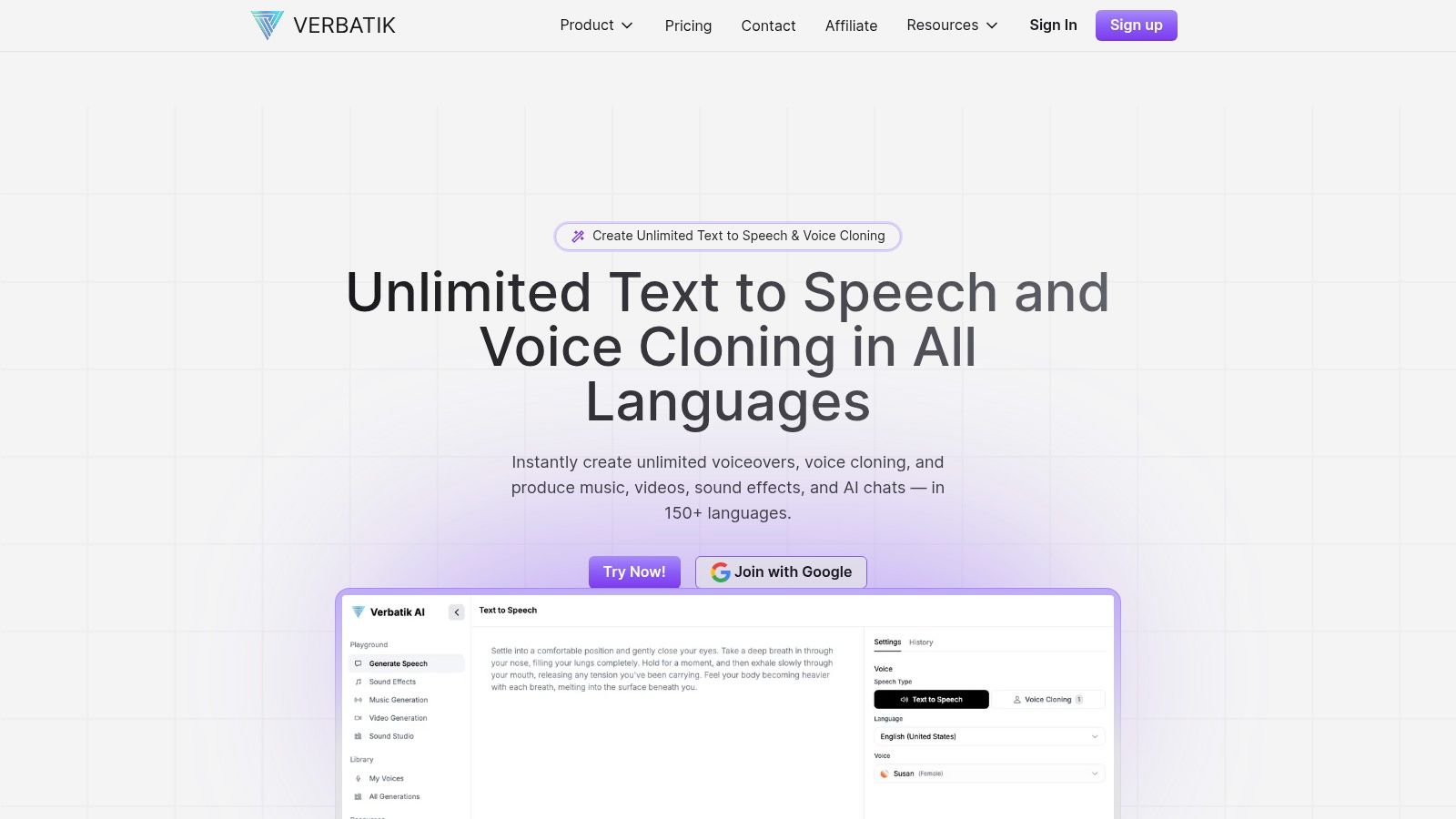
The platform’s instant voice cloning technology captures impressive emotional nuance, creating high-fidelity replicas from just a short audio sample. This allows for dynamic and engaging narration that sounds natural, not robotic. Verbatik consolidates the entire content creation workflow by integrating a full suite of AI tools. Beyond voice, users can access royalty-free music, sound effects, and even generate AI avatar videos, all within a single, intuitive dashboard. This all-in-one approach streamlines production, saving significant time and resources. For a deeper understanding of the technology, you can explore their detailed guide on the advancements in voice cloning technology.
Website: https://verbatik.com
ElevenLabs is a leading platform in the voice synthesis space, renowned for its incredibly realistic and emotionally nuanced text-to-speech (TTS) output. While it offers a powerful free AI voice clone tool, its true strength lies in the quality of its "Professional Voice Cloning" and the extensive API for developers. The free tier is an excellent entry point for testing the technology's capabilities, providing users with 10,000 characters per month (roughly 10 minutes of audio). For creators needing more capacity, this limit contrasts with platforms like Verbatik, which offers unlimited text-to-speech and voice cloning for uninterrupted production.
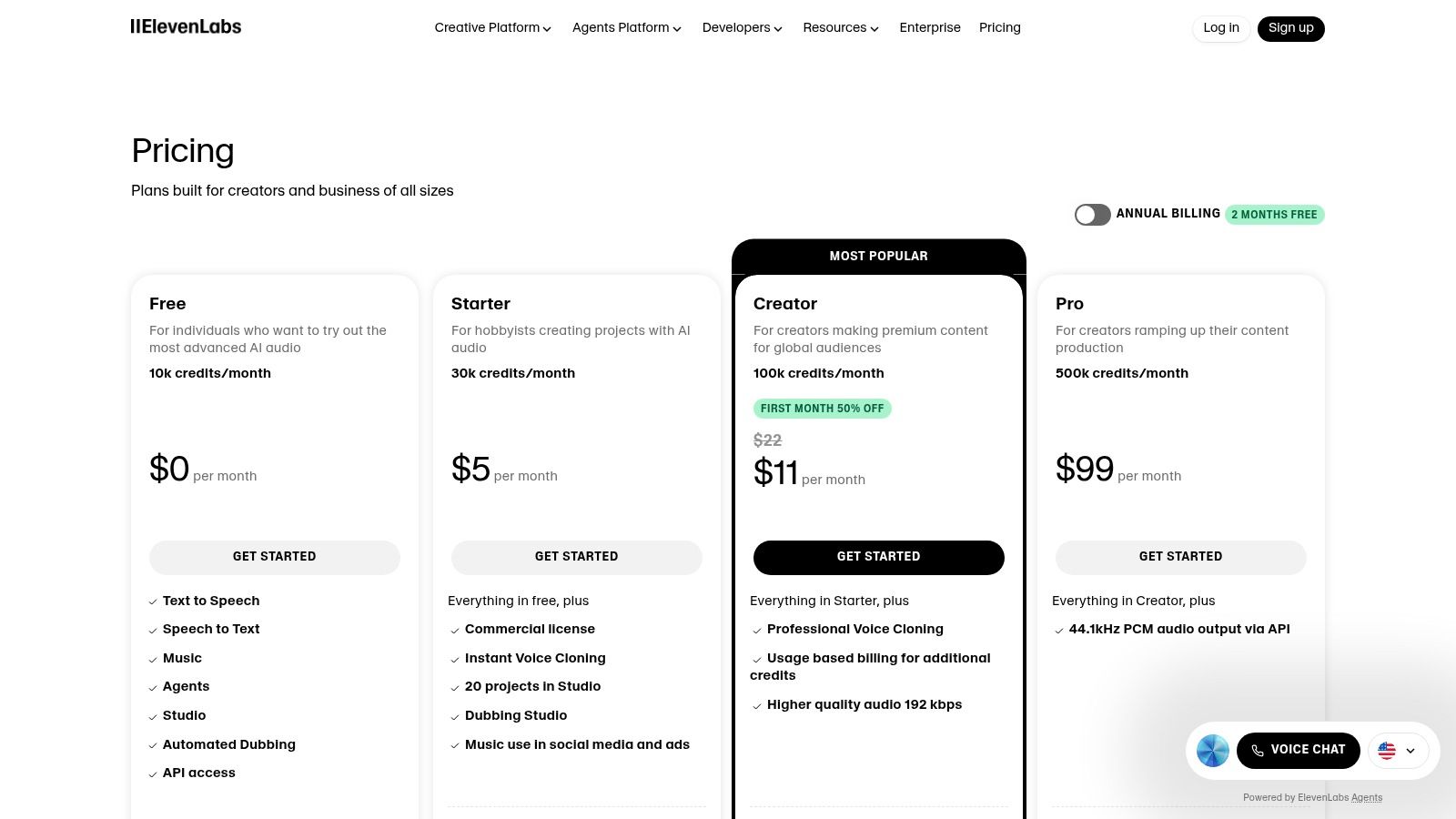
The platform's standout feature is its "Instant Voice Cloning," which requires only a minute of clean audio to create a usable clone. However, access to this and the more advanced Professional Voice Cloning is reserved for paid tiers. The actionable insight here is to use the free plan to generate high-quality voiceovers for short projects like social media clips or YouTube intros, and then evaluate if the paid tiers' cloning features are necessary for your workflow.
Pros:
Cons:
Website: https://verbatik.com/pricing
PlayHT is a powerful cloud-based text-to-speech platform that offers both instant and professional-grade voice cloning. While many of its advanced features are behind a paywall, it stands out with a generous startup program that provides free credits, making it an excellent option for developers and small teams looking to explore a high-quality free AI voice clone solution. The platform emphasizes speed and realism, positioning itself as a strong contender for projects requiring quick turnaround and natural-sounding audio.
PlayHT's key strength is its developer-centric approach, featuring real-time streaming APIs that are perfect for interactive applications. Its instant cloning requires just a few minutes of audio to generate a usable voice model. The actionable insight is to leverage its startup program credits for a substantial free trial. This makes it a practical choice for teams needing to prototype integrations or create initial voice assets before committing to a subscription, a different approach compared to platforms like Verbatik, which offer unlimited text-to-speech and voice cloning from the start.
Pros:
Cons:
Website: https://app.verbatik.com/app/sign-up
Resemble AI is a flexible and developer-friendly platform offering a robust suite of voice AI tools, including a powerful free AI voice clone option through its onboarding trial. It stands out with a clear pay-as-you-go credit system, making it accessible for pilot projects while being scalable for enterprise needs. The actionable insight here is that you can create custom voices with as little as three minutes of audio, providing a low-friction entry point for high-quality voice generation.
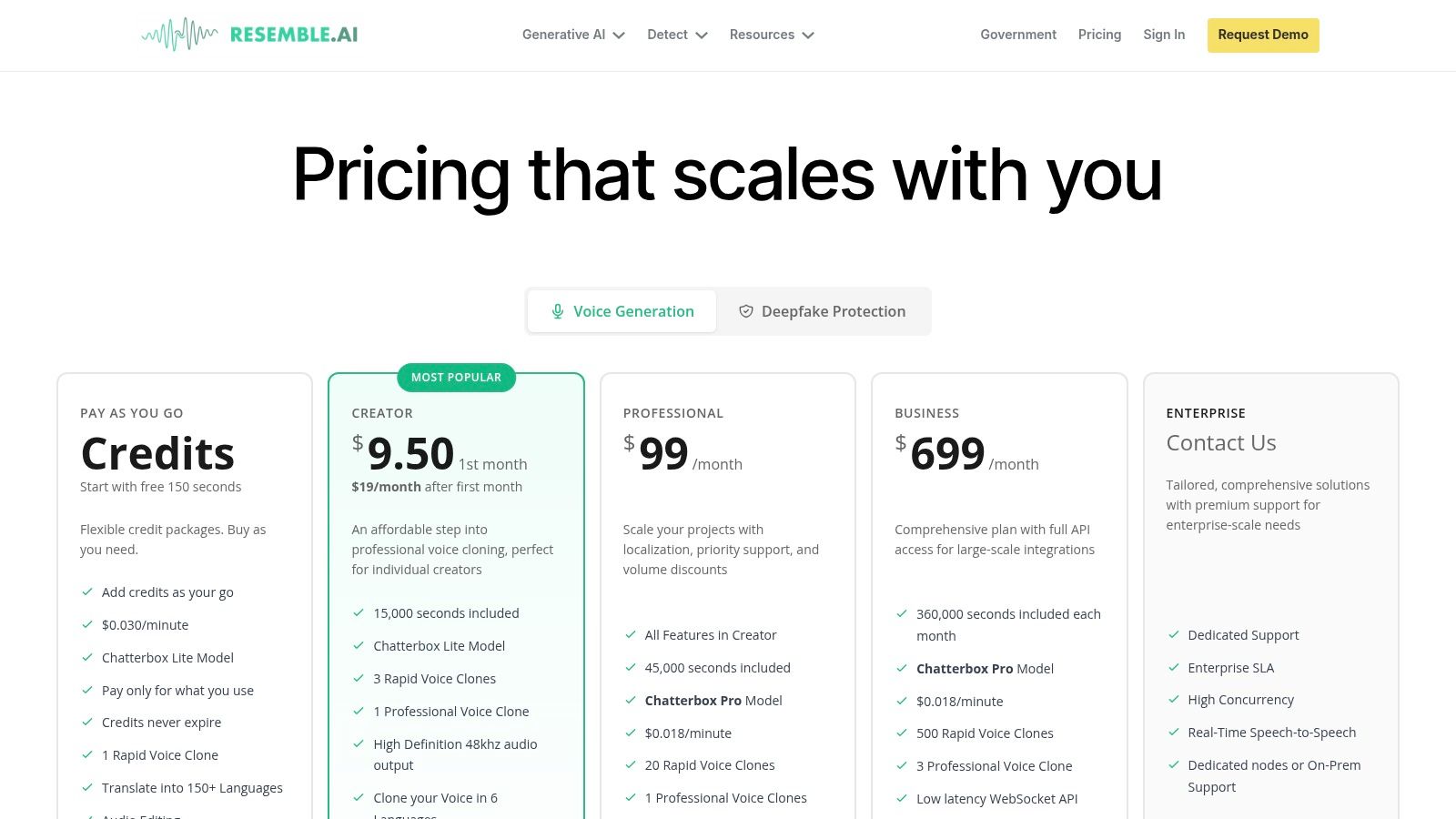
The platform's strength lies in its comprehensive toolset, which includes not just voice cloning but also real-time speech-to-speech conversion and localization into over 150 languages. The free trial gives users access to create one voice clone and experiment with the API. While this is great for testing, ongoing projects require purchasing credits, which contrasts with platforms like Verbatik that offer unlimited text-to-speech and voice cloning on their paid plans. The highest fidelity clones are also reserved for higher-tier professional services.
Pros:
Cons:
Website: https://www.resemble.ai/pricing/
Kits.AI is a unique platform in the voice synthesis market, carving out a niche specifically for musicians, singers, and producers. While many tools focus on spoken word, Kits.AI excels at music-centric applications, offering voice conversion and cloning tailored for vocal tracks. Its approach to providing a free AI voice clone experience is through conversion minutes. The actionable insight is to use the free tier to test its core functionality for musical projects before committing to a paid plan. This makes it an ideal starting point for artists wanting to experiment with AI in their music.
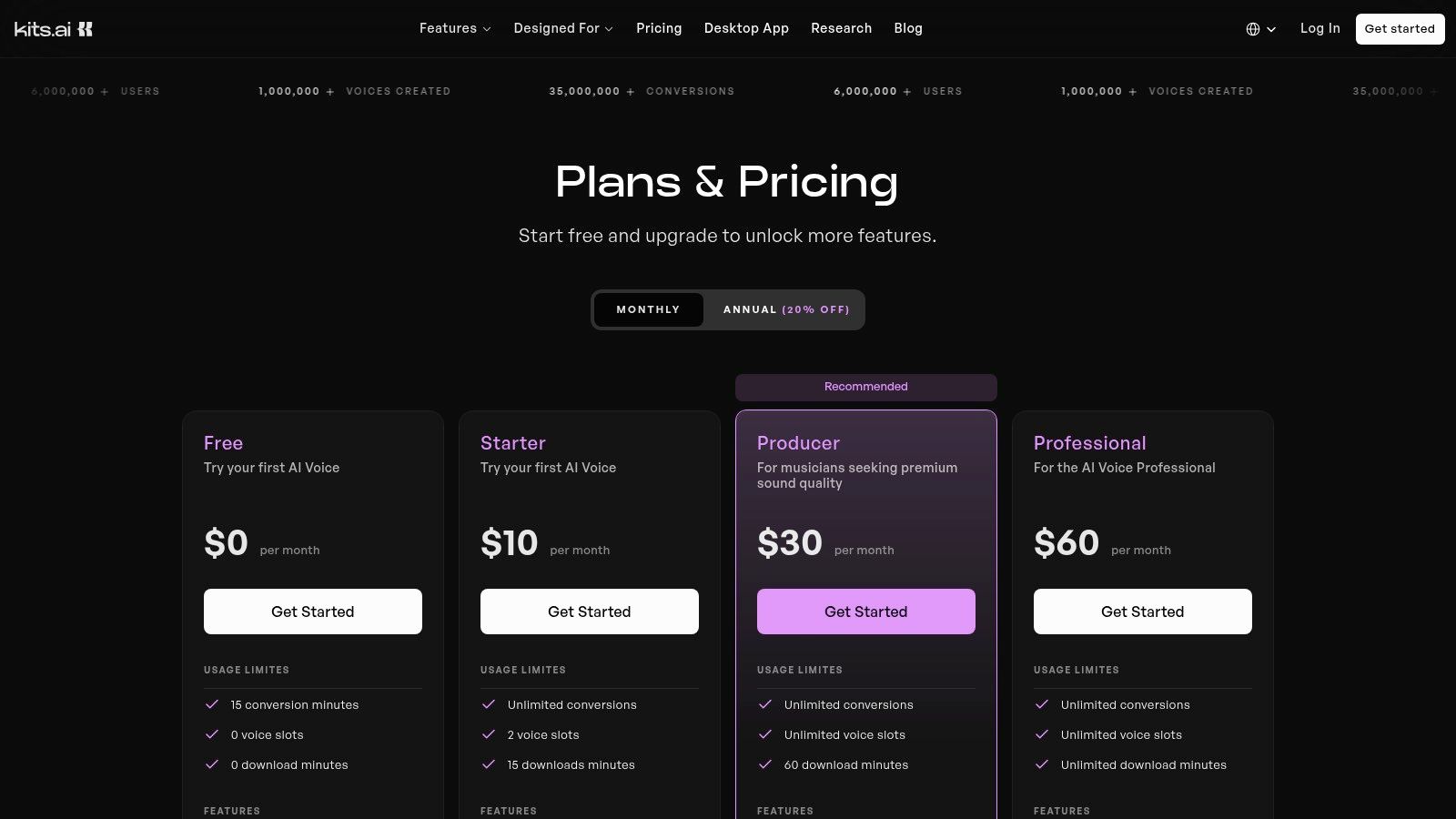
The platform's standout features are its AI Voice Converter and Voice Blender, which allow users to transform their vocal recordings using a library of artist voices. The free plan provides limited conversion minutes to explore these tools. However, true "Instant" or "Professional" voice cloning is a premium feature, requiring a paid subscription. The free tier is best used for experimentation, as it excludes cloning and the ability to download your generated audio files. For spoken word projects requiring high volume, consider alternatives like Verbatik, known for unlimited text-to-speech and voice cloning.
Pros:
Cons:
Website: https://app.verbatik.com/app/sign-up
Uberduck has carved out a niche as a creator-friendly platform, popular for everything from rap and singing to experimental voice projects. It offers a very accessible free AI voice clone process that gets users started in seconds. The actionable insight is to use Uberduck as a go-to for content creators wanting to test the waters without commitment. While its free tier is a great entry point, its affordable paid plans unlock commercial usage and API access for more serious projects.
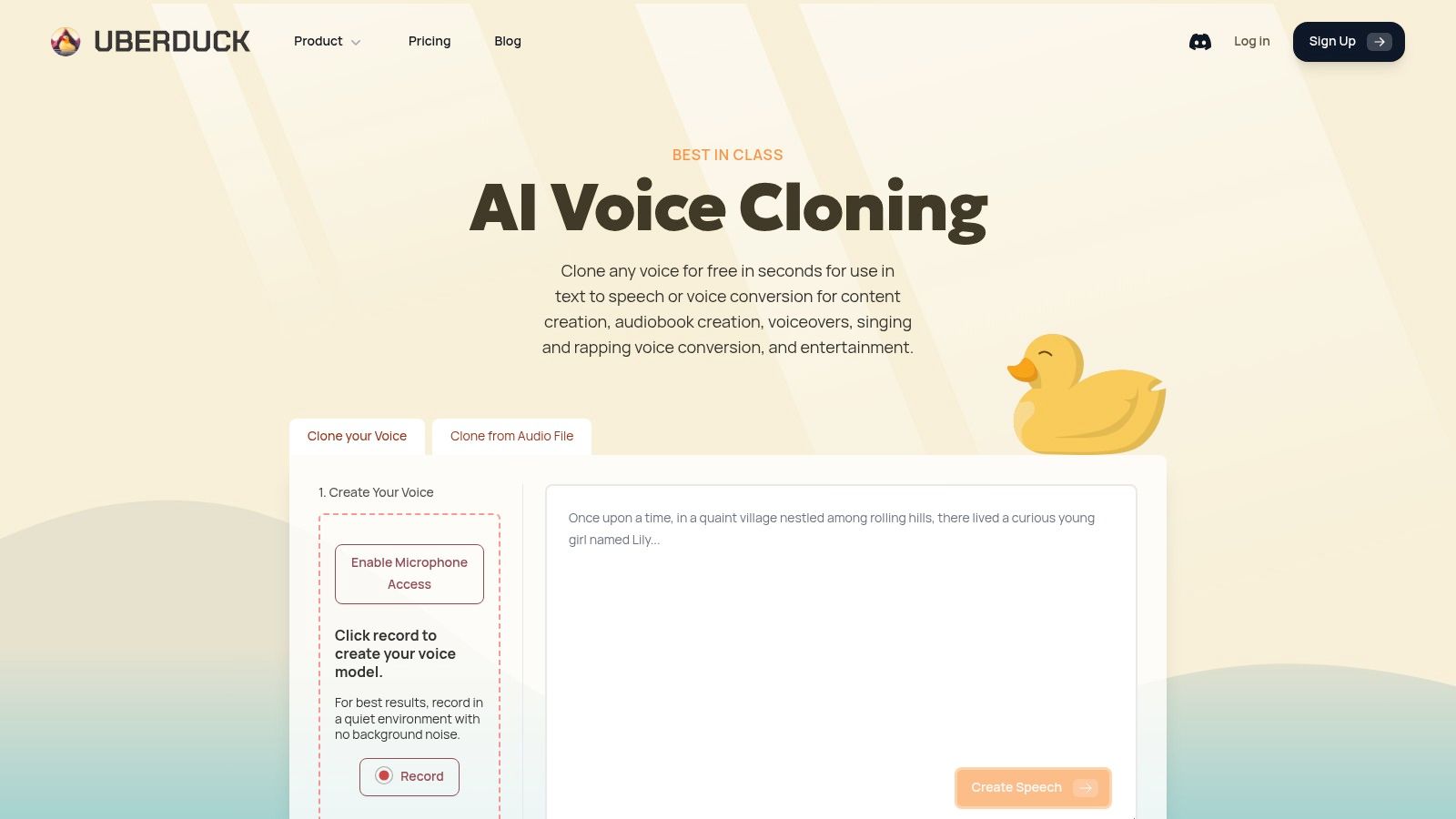
The platform's standout feature is its straightforward voice cloning onboarding, combining text-to-speech and voice conversion for creative workflows. However, the free usage is quite limited, and most advanced features, like API access and commercial rights, are behind a paywall. For those seeking more extensive generation capabilities without such restrictions, platforms like Verbatik offer unlimited text-to-speech and voice cloning, providing a different value proposition for high-volume users. Learn more about the evolving landscape of AI voice generation tools to compare your options.
Pros:
Cons:
Website: https://app.verbatik.com/app/sign-up
Descript is a powerful, all-in-one audio and video editor that treats media like a text document. Its integrated AI voice cloning feature, "Overdub," is designed for correcting mistakes or adding new words to your own recordings. The actionable insight is to use Descript’s free plan to experiment with its text-based editing workflow, making it a unique tool for podcasters and video creators who need a free AI voice clone for minor edits and corrections.
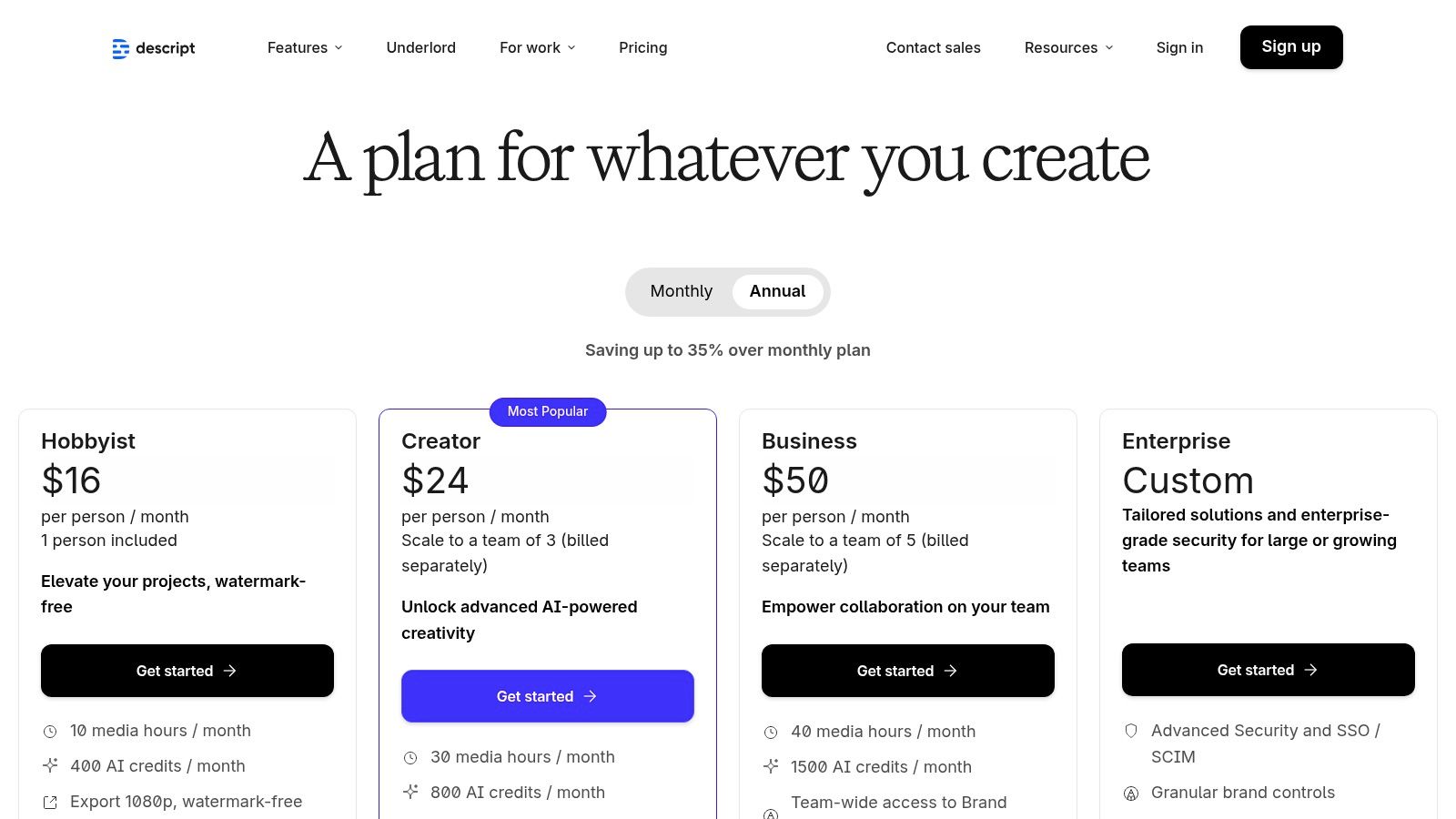
Descript’s Overdub feature stands out by focusing on cloning your own voice with a clear and responsible consent workflow. The free tier allows you to generate a limited vocabulary of up to 1,000 words, perfect for quick fixes. For unlimited vocabulary and more extensive cloning, a paid plan is required. The platform's true value lies in its seamless integration of transcription, editing, and voice generation, creating an efficient post-production environment. For generating full scripts or long-form content, platforms with unlimited text-to-speech and voice cloning, like Verbatik, are a better fit.
Pros:
Cons:
Website: https://www.descript.com/price
Voice.ai carves out a unique niche by focusing on real-time voice changing through a desktop application, making it popular among gamers and streamers. Instead of a purely web-based interface, it offers a downloadable client that processes audio directly on your machine. The actionable insight is to download the free client to get a free AI voice clone experience for live applications. Its more advanced features and business offerings are geared towards developers needing scalable TTS solutions and real-time agent voice conversion.
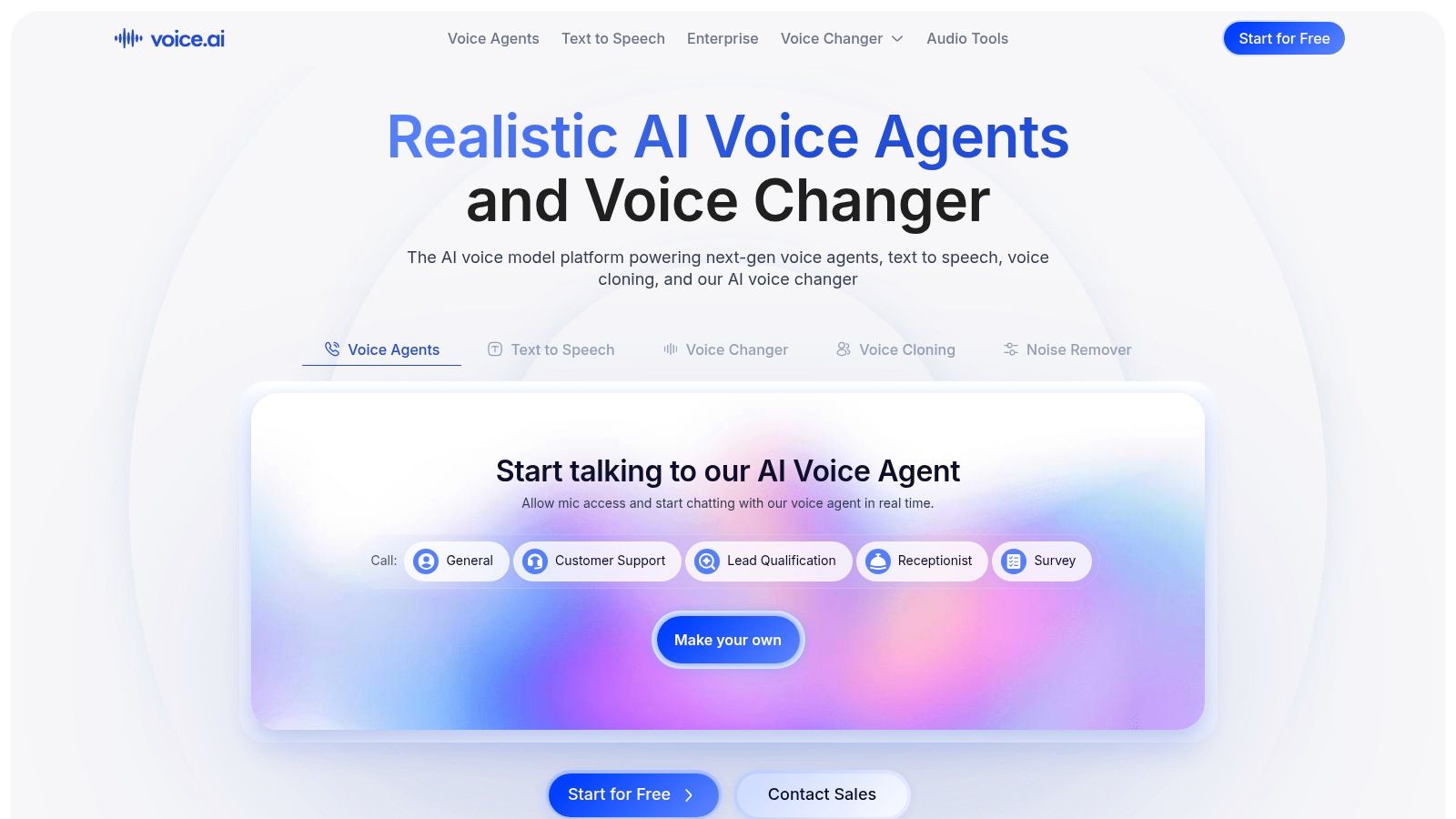
The platform's primary strength is its client-side, real-time voice conversion, which is a major differentiator from browser-based tools. It also offers APIs and SDKs for developers looking to build custom integrations. The free version gives you a taste of the technology, but users should be aware of reports concerning billing practices and variable performance. Its approach contrasts with services like Verbatik, which offer unlimited text-to-speech and voice cloning directly through a more predictable web interface. For more details on the platform's capabilities, explore the innovations behind Voice.ai's text-to-speech.
Pros:
Cons:
Website: https://app.verbatik.com/app/sign-up/
MyShell OpenVoice is a powerful, fully open-source instant voice cloning model, making it a unique and compelling free AI voice clone option for developers and technically-inclined users. Developed by MIT and MyShell, it is released under the permissive MIT License, meaning it is completely free for both personal and commercial use without restrictions. The actionable insight is to use this tool if you need total control over data privacy and integration through self-hosting, as it offers a level of freedom commercial platforms cannot match.
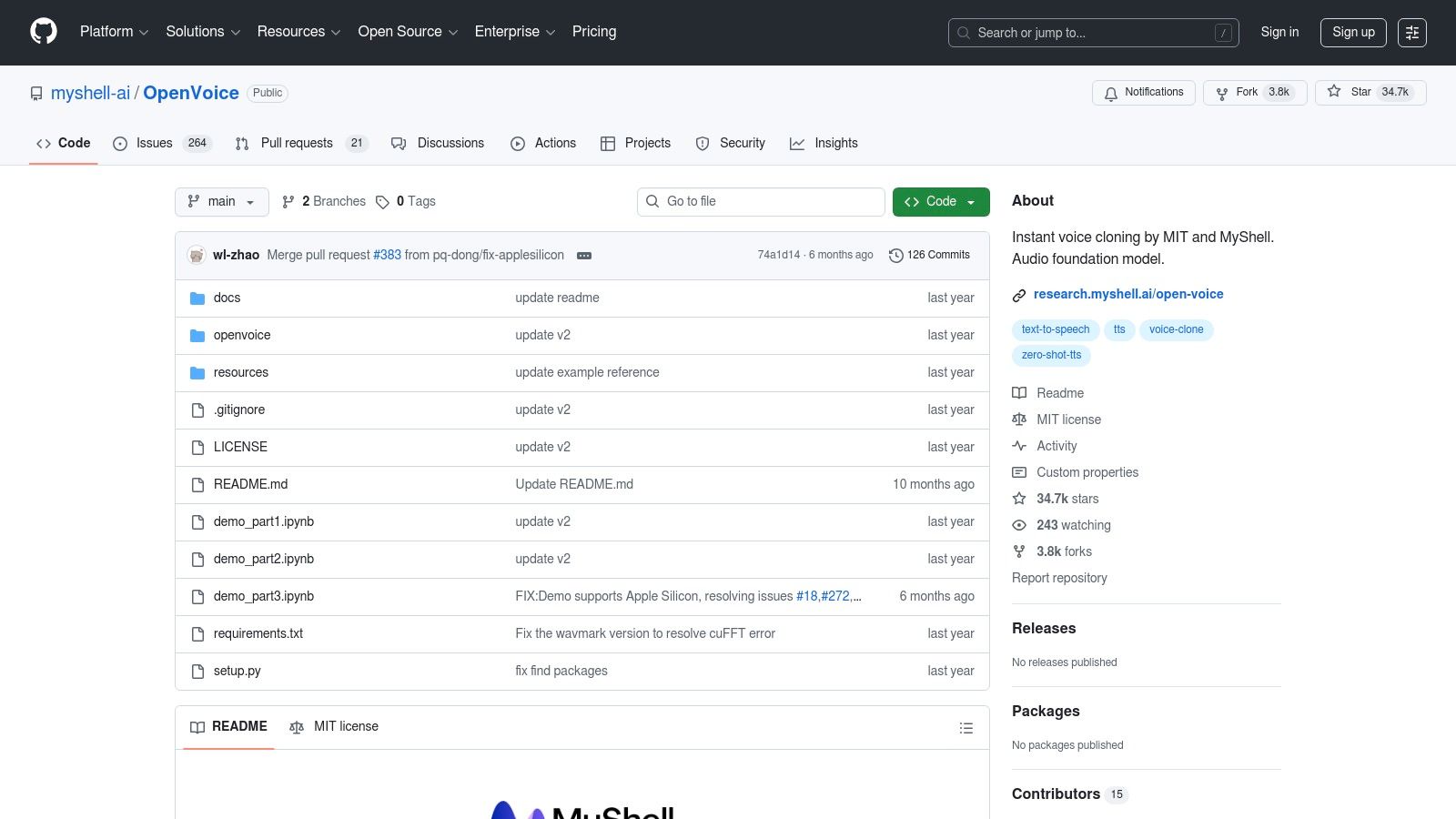
The platform excels at instant tone-color cloning from just a short audio sample and supports granular style controls, allowing users to tweak emotion, rhythm, and accents. A key differentiator is its zero-shot cross-lingual cloning capability, enabling a voice to speak in multiple languages. Unlike turnkey platforms, OpenVoice requires users to have the technical expertise and infrastructure to set it up. It is a tool for building, not just using, and a stark contrast to easy-to-use services like Verbatik, which provide unlimited text-to-speech and voice cloning through a simple interface.
Pros:
Cons:
Website: https://github.com/myshell-ai/OpenVoice
For users seeking a completely free AI voice clone solution with maximum control, the Retrieval-based Voice Conversion (RVC) Project is an unparalleled open-source toolkit. Unlike cloud-based platforms, RVC runs locally on your machine, offering total privacy and zero costs. The actionable insight is to adopt this tool if you are a technically-inclined user who wants to train your own high-quality voice models for real-time conversion or batch processing without the limitations found in many commercial tools.
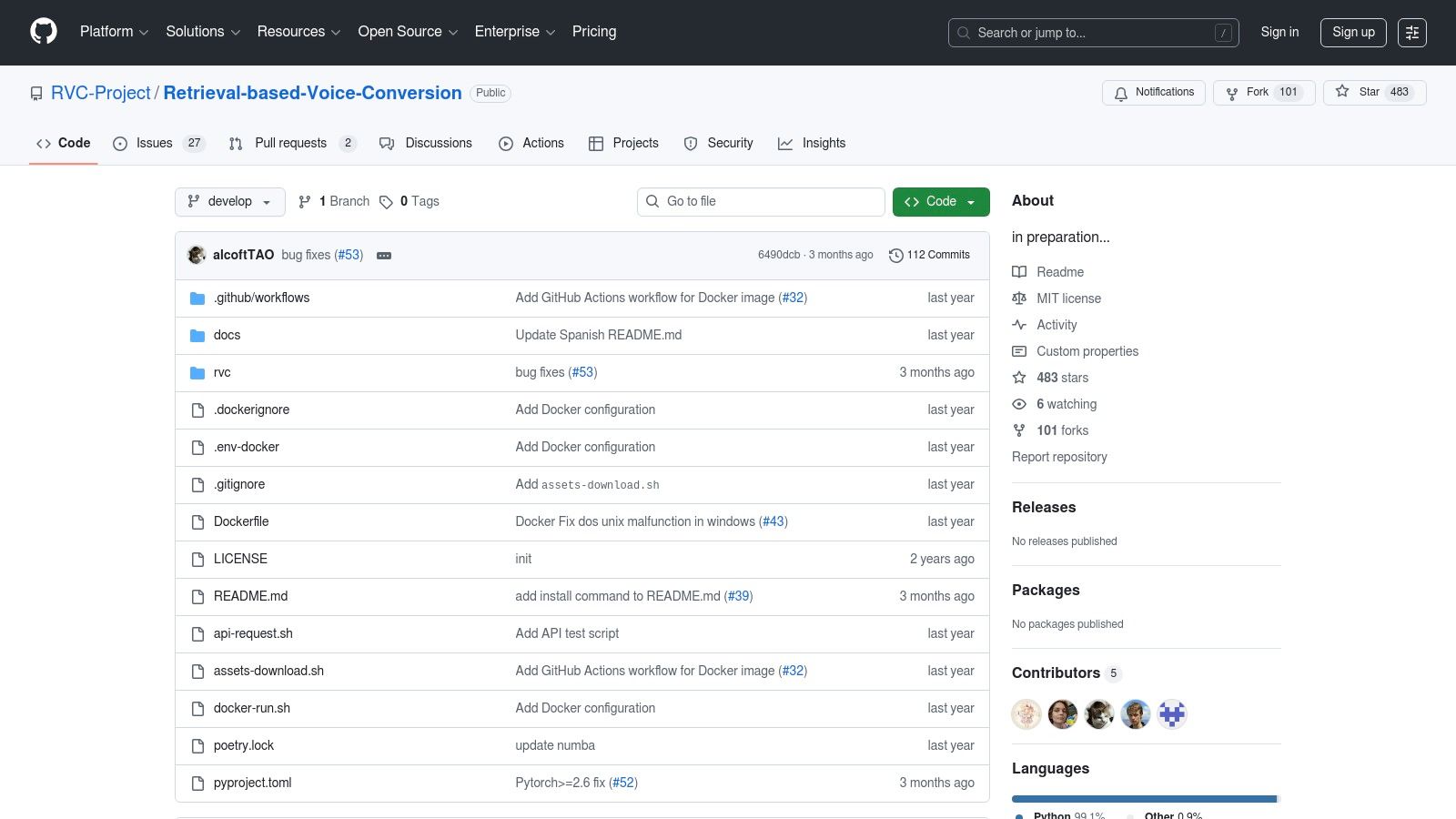
The project's core strength is its VITS-based architecture combined with retrieval mechanisms, allowing for high-fidelity voice conversion. Users can either train a custom model with their own audio data or use pre-trained models shared by the community. While there is no official interface, numerous community-developed GUIs and Google Colab notebooks make it accessible. It represents a different approach from streamlined services like Verbatik, which offer unlimited text-to-speech and voice cloning without any technical setup. You can learn more about the evolution of these voice cloning models and their underlying technology.
Pros:
Cons:
Website: https://github.com/RVC-Project/Retrieval-based-Voice-Conversion
For users seeking a powerful, completely free, and open-source solution, w-okada's voice-changer stands out as a top-tier client. This is not a cloud-based service but a local application for Windows, Mac, and Linux that specializes in real-time voice conversion using RVC models. The actionable insight is to use this free AI voice clone tool for live applications like streaming or online gaming, where you need to modify your voice on the fly without latency issues or per-minute costs.
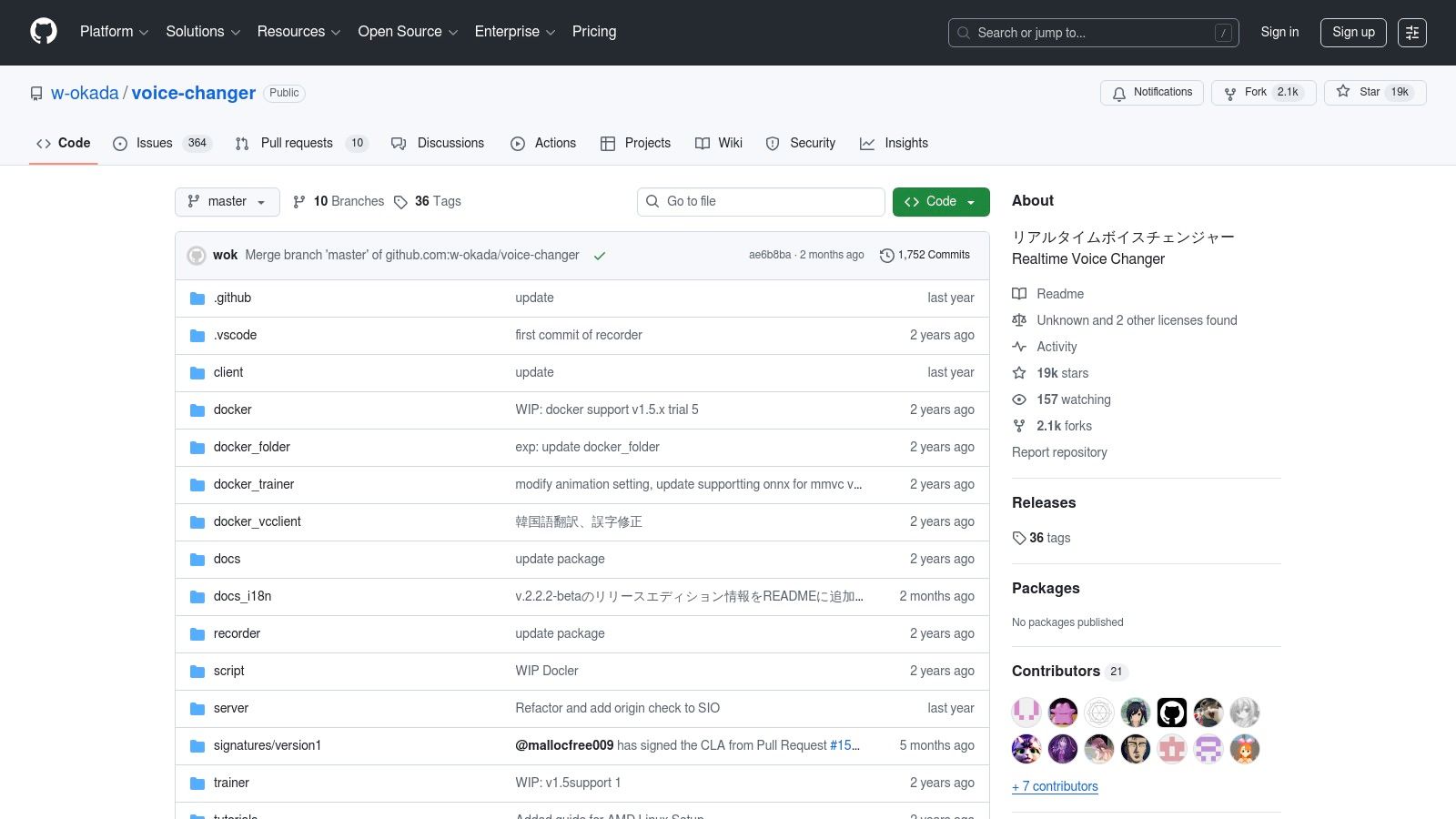
The platform’s core strength is its real-time microphone-to-target voice conversion, which runs entirely on your local machine. This offline processing ensures privacy and eliminates reliance on internet connectivity. Because it's open-source, it benefits from an active community that contributes frequent updates and improvements. While this provides incredible flexibility, it also means support is community-driven rather than guaranteed by a vendor. This is a key difference from platforms like Verbatik, which provide both a product and support for their unlimited text-to-speech and voice cloning services.
Pros:
Cons:
Website: https://github.com/w-okada/voice-changer
For those with technical expertise and a powerful computer, Tortoise-TTS offers a completely free AI voice clone solution that operates offline. As an open-source project, it provides unparalleled control and privacy. Its strength lies in producing high-fidelity, natural-sounding speech for long-form content. The actionable insight is to choose Tortoise-TTS for projects like audiobooks or podcasts, where real-time generation is not a priority and audio quality is paramount.
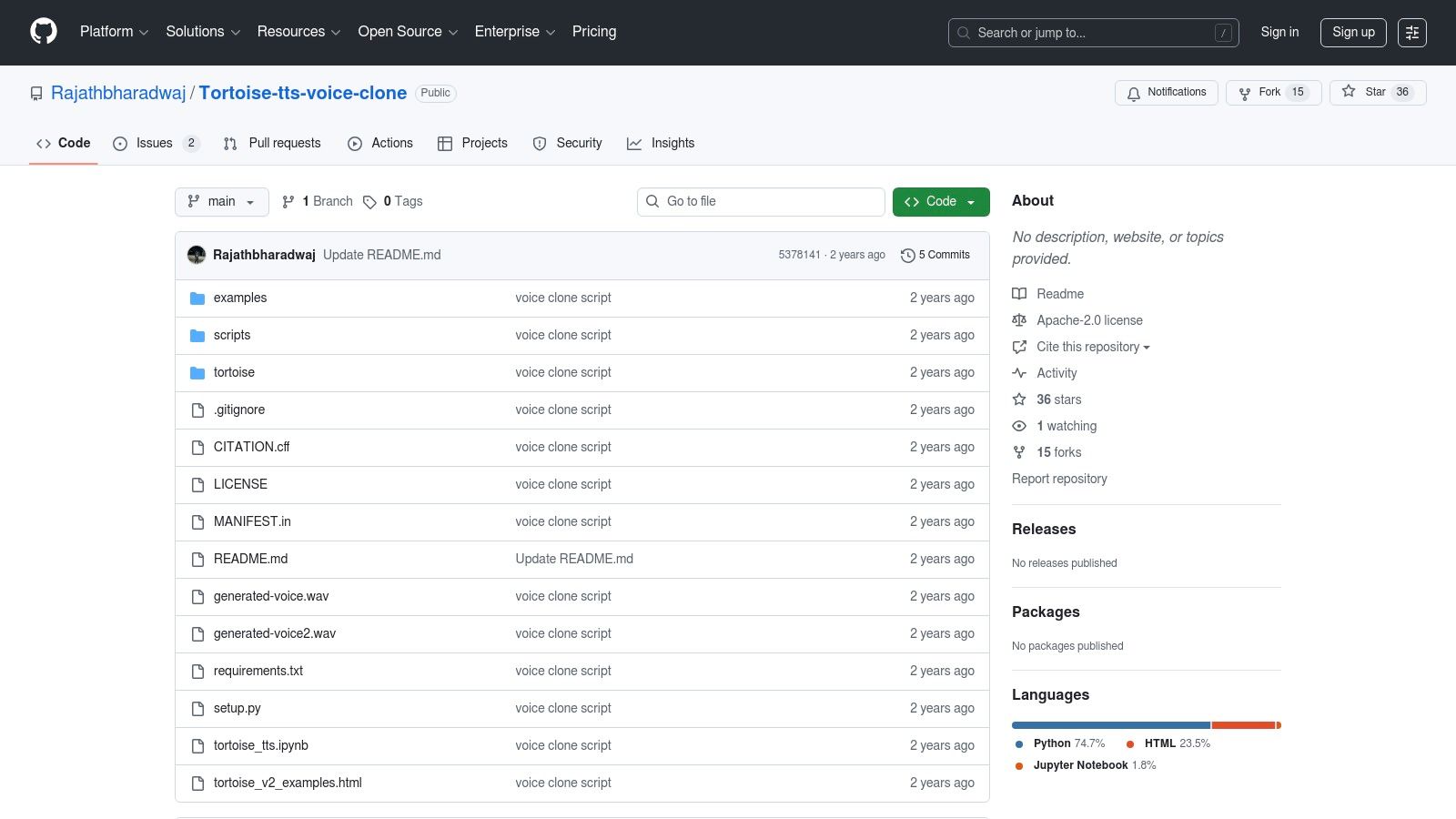
Tortoise-TTS uses a reference-audio-guided approach, requiring just a few high-quality audio clips of the target voice to create a clone. Since it runs locally on your machine (requiring a capable GPU), there are no character limits or subscriptions, a key differentiator from cloud services like Verbatik, which offers unlimited text-to-speech and voice cloning without the hardware requirements. However, its major drawback is the extremely slow inference speed, which makes it unsuitable for any application needing a quick turnaround or live interaction.
Pros:
Cons:
Website: https://github.com/Rajathbharadwaj/Tortoise-tts-voice-clone
| Platform | Core Features/Tech ✨ | User Experience ★★★★☆ | Value & Pricing 💰 | Target Audience 👥 | Unique Selling Points 🏆 |
|---|---|---|---|---|---|
| Verbatik AI 🏆 | 600+ realistic voices, instant voice cloning, AI avatars, music & effects, Chat AI | Studio-quality, emotional, fast cloning | $0.000025/char, commercial rights | Creators, marketers, educators, enterprises | All-in-one creative suite, unlimited TTS & cloning, global languages |
| ElevenLabs | Instant/pro voice cloning, multi-language, credit system | High realism, robust API | Credit-based, limited free plan | Creators, developers | Frequent updates, professional workflows |
| PlayHT | Instant cloning, real-time APIs, startup free credits | Natural voices, fast processing | Paid plans, unclear pricing | Teams, developers | Startup credits, strong dev tools |
| Resemble AI | Rapid cloning, localization 150+ languages, deepfake protection | Clear pricing, professional clones | Pay-as-you-go credits | Businesses, enterprise pilots | Localization focus, low entry cost |
| Kits.AI | Music-centric cloning, choir tools, stem conversion | Good for musicians, scalable plans | Free + pro tiers | Singers, musicians | Music tools beyond speech cloning |
| Uberduck | Free onboarding, voice conversion, mobile-friendly | Creator-focused, affordable paid tiers | Low-cost commercial plans | Content creators, experimental users | Strong creator community |
| Descript Overdub | AI voice cloning with consent, audio/video editing suite | Integrated editing, strong transcription | Free limited, Pro for advanced | Podcasters, YouTubers | Editing + cloning in one tool |
| Voice.ai | Real-time voice changer, downloadable desktop client | Client-side processing, free basic download | Paid tiers for API & business | Gamers, streamers, developers | Real-time local voice changing |
| MyShell OpenVoice | Open-source instant cloning, style & accent controls | Free, self-hosted, requires ML expertise | Free (MIT License) | Developers, privacy-focused users | Fully free, open, privacy via self-hosting |
| RVC Project | Open-source voice conversion, local/offline use | Free, community-supported local processing | Free | Technical users, privacy seekers | Large community, real-time GPU support |
| w-okada/voice-changer | Real-time voice changer client, cross-platform | Free, active community | Free | Streamers, tech users | Real-time, cross-platform, community-driven |
| Tortoise-TTS | Offline zero-shot cloning, diffusion model | High-fidelity, slow inference | Free | Audiobook creators, privacy users | Offline, high quality narration |
Navigating the landscape of AI voice cloning technology reveals a powerful truth: high-quality, personalized audio is no longer an exclusive resource. As we've explored, the options range from polished, user-friendly platforms to complex, open-source projects. The key takeaway is that finding a free AI voice clone solution is entirely achievable, but the "best" tool is highly dependent on your specific project goals, technical comfort level, and the scale of your content needs.
Before committing to a platform, reflect on the core requirements of your project. Here's an actionable checklist:
To simplify your decision, here are actionable recommendations based on user profiles:
Ultimately, the power of a free AI voice clone is in its ability to democratize audio creation. By carefully weighing these factors, you can select a tool that not only meets your immediate needs but also supports your long-term creative vision. Voice cloning is just one facet of the modern creator's toolkit; for a broader perspective on leveraging artificial intelligence, exploring other valuable free AI content creation tools can further enhance your workflow.
Ready to move from theory to creation without limits? Verbatik AI offers a robust platform that combines high-fidelity voice cloning with truly unlimited text-to-speech and voice cloning, empowering you to produce as much content as you need. Start your next audio project today by exploring the possibilities at Verbatik AI.
Join 150,000+ creators, developers, and businesses using Verbatik AI to produce studio-quality voiceovers, clone voices, and generate music and sound effects.
150K+
creators
150+
languages
75ms
latency
Trusted by teams at leading companies worldwide


